ORA Fire Clownfish Captive-Bred for Sale
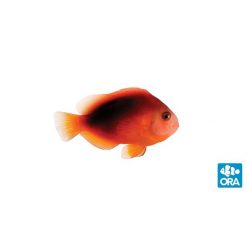
The ORA Fire Clownfish Captive-Bred (Amphiprion ephippium) is a hardy, reef-safe choice for aquarists who want both beauty and reliability in their tanks. Known for its deep red-orange coloration that intensifies with age, this member of the Tomato Complex stands out in any saltwater aquarium. Unlike wild-caught clownfish, ORA captive-bred Fire Clownfish are more resilient, adapt easily to prepared diets, and show a lower risk of disease. Aquaculture breeding also supports sustainable practices, making them a responsible choice for hobbyists. With their confident swimming motion and compatibility with host anemones, these fish remain a favorite among reef keepers.
Key Facts
| Specification | Details |
|---|---|
| Scientific Name | Amphiprion ephippium |
| Family | Pomacentridae |
| Origin | Captive-bred by ORA, derived from Indo-Pacific |
| Max Size | 4 inches |
| Purchase Size | 1–2 inches |
| Lifespan | 6–10 years |
| Care Level | Easy |
| Minimum Tank Size | 30 gallons |
| Temperament | Semi-aggressive |
| Reef Safe | Yes |
| Diet | Omnivore – flakes, pellets, frozen foods, shrimp |
| Temperature | 75–82°F |
| pH Range | 8.1–8.4 |
| Salinity | 1.020–1.026 |
Appearance
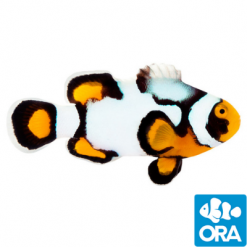
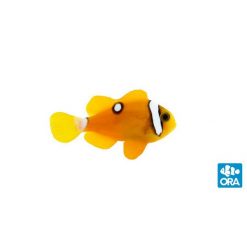
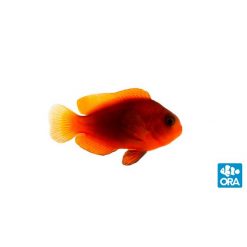
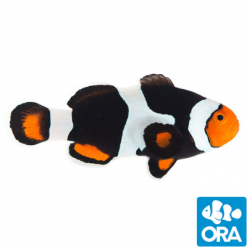
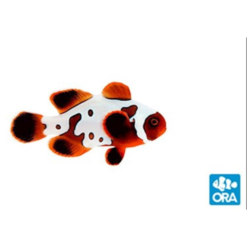
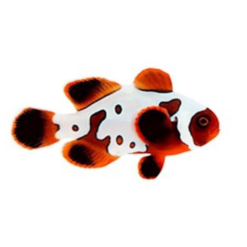
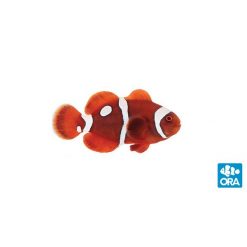
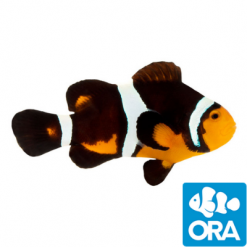
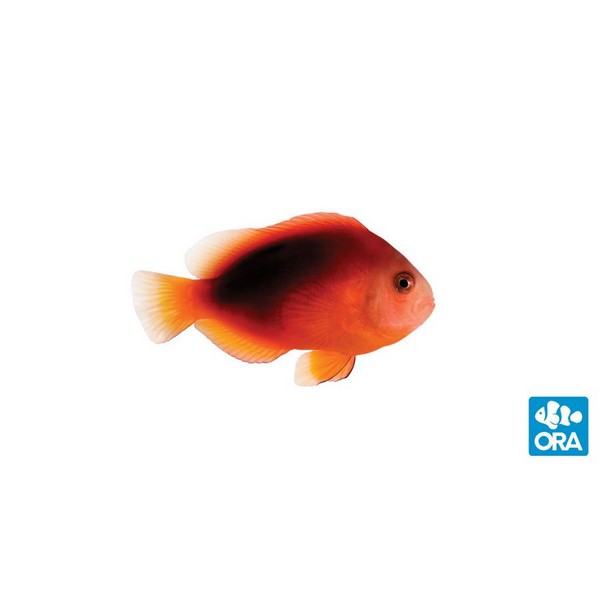
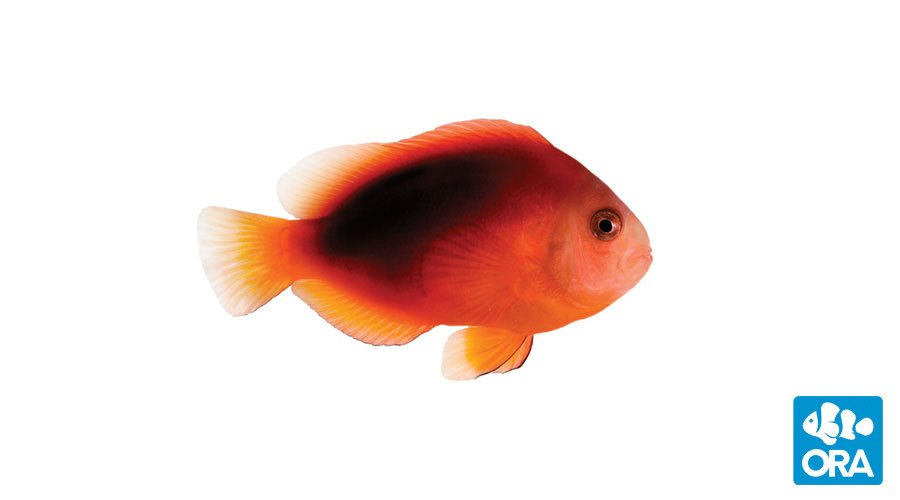
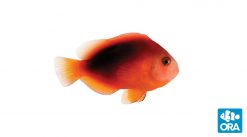
Juvenile ORA Fire Clownfish display a thin white stripe just behind the eye, which disappears as they mature. Adults develop a rich orange to scarlet coloration with a distinctive black saddle patch on each side. Their coloration deepens over time, making them one of the most visually striking clownfish in the Tomato Complex.
Care & Requirements
ORA Fire Clownfish are considered easy to care for, making them suitable for both intermediate and experienced marine aquarists. A single fish requires a minimum 30-gallon tank, or a bonded pair in 40-50 gallons, with larger systems recommended to reduce territorial aggression. They thrive in stable conditions with temperatures between 75–82°F, pH 8.1–8.4, and salinity of 1.020–1.026. Providing live rock and hiding spaces helps them establish territory boundaries. While not required, they readily host with bubble-tip or carpet anemones. Feeding is straightforward, as they accept pellets, flakes, and frozen foods such as mysis shrimp and brine shrimp.
Can Fire Clownfish live without an anemone?
Yes, they do not require an anemone to thrive and will adapt well without one.
How often should ORA Fire Clownfish be fed?
Feed small portions 2–3 times daily with a mix of pellets, flakes, and frozen foods.
Tank Mates & Compatibility
These clownfish are reef-safe and can live peacefully with many saltwater fish and invertebrates. Good tank mates include tangs, wrasses, gobies, and reef-safe invertebrates. However, avoid housing them with other Tomato Complex clownfish or overly aggressive species to prevent conflict. When kept as a pair, they may become territorial and defend their space, especially around a host anemone.
Can ORA Fire Clownfish be kept in groups?
It is best to keep them singly or in bonded pairs, as groups may fight.
Are they safe with corals and invertebrates?
Yes, they are considered reef-safe and will not harm corals or clean-up crew species.
Aquaculture/Availability
ORA Fire Clownfish are consistently captive-bred, with most specimens available in the trade coming from aquaculture facilities rather than the wild. Captive breeding ensures hardier fish, accustomed to prepared diets, and significantly reduces pressure on wild populations. ORA also offers paired specimens that have been selected for compatibility, helping aquarists avoid pairing aggression.
Are ORA Fire Clownfish always captive-bred?
Yes, all ORA Fire Clownfish are captive-bred and not wild-caught.
Is it better to buy a single or a pair?
Pairs are recommended if you want natural breeding or hosting behavior, but singles do well in community aquariums.
Why Buy From Oceansgarden.com
- Captive-Bred & Sustainable: Many of our fish and invertebrates are captive-bred or sustainably sourced to promote healthy reef ecosystems.
- Expert Care Before Shipping: Every animal is maintained under professional aquarium standards for health, diet, and water quality.
- Live Arrival Guarantee: We stand behind each shipment with a Live Arrival Guarantee for your peace of mind.
- Fast, Reliable Shipping: Orders are packed with proven methods and shipped overnight to ensure safe arrival.
- Transparent Policies: Clear shipping, refund, and guarantee information available on every order page.
- Trusted by Hobbyists: Backed by years of experience and thousands of satisfied marine aquarium keepers across the U.S.
FAQ
How big do ORA Fire Clownfish get in captivity?
ORA Fire Clownfish can reach up to 4 inches in length when fully grown, with males typically smaller than females. Their growth rate depends on diet, tank size, and overall water quality.
What is the lifespan of an ORA Fire Clownfish?
With proper care, they can live 6–10 years in captivity. Stable water parameters and a varied diet are key to longevity.
Do ORA Fire Clownfish host all types of anemones?
They most commonly host bubble-tip, carpet, and magnificent anemones, though hosting is not guaranteed. Some individuals may choose coral or even aquarium decorations as surrogates.
Can ORA Fire Clownfish be kept in nano tanks?
They require at least 30 gallons, so nano tanks under this size are not suitable. A larger tank reduces aggression and provides room for swimming.
How do captive-bred Fire Clownfish differ from wild-caught?
Captive-bred fish are hardier, disease-resistant, and accustomed to prepared diets, making them easier to care for than wild-caught specimens.
Are ORA Fire Clownfish aggressive toward other clownfish?
Yes, they can be territorial toward other clownfish species, especially those from the same Tomato Complex. It is best not to mix them with similar species.
What water conditions are best for ORA Fire Clownfish?
They thrive in reef tank conditions: 75–82°F, pH 8.1–8.4, and salinity between 1.020–1.026. Maintaining stability is more important than exact numbers.
Can ORA Fire Clownfish breed in home aquariums?
Yes, they can spawn in captivity if kept as a bonded pair. They lay eggs on a flat surface near their territory, and fry rearing requires specialized care.
| size | 1-2 inches |
|---|
Related products