

ORA Tridacna Gigas Clam for Sale
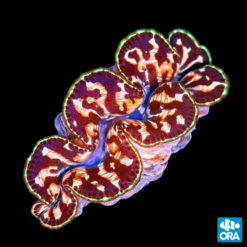
The ORA Tridacna Gigas Clam (Tridacna gigas) is an aquacultured giant clam species prized for its rapid growth, brilliant coloration, and reef-safe nature. Bred by ORA (Oceans, Reefs & Aquariums), this specimen brings the awe of the ocean’s largest bivalve into advanced reef tanks. Known to exceed 4 feet in length in the wild, the ORA Gigas Clam begins its journey as a vibrant juvenile ready to thrive under strong lighting and stable water conditions. With proper care, it becomes a living showpiece that anchors the reefscape for decades.
Key Facts
| Specification | Details |
|---|---|
| Scientific Name | Tridacna gigas |
| Family | Cardiidae |
| Origin | Indo-Pacific |
| Max Size | 4 feet in captivity; over 6 feet in wild |
| Purchase Size | 2+ inches (ORA juvenile) |
| Lifespan | 40+ years with proper care |
| Care Level | Expert |
| Minimum Tank Size | 180–300 gallons |
| Temperament | Peaceful, non-aggressive |
| Reef Safe | Yes |
| Diet | Photosynthetic; supplements of live phytoplankton beneficial |
| Temperature | 75–78°F |
| pH Range | 8.1–8.4 |
| Salinity (SG) | 1.024–1.026 |
Appearance
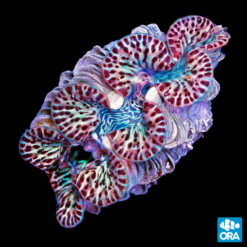
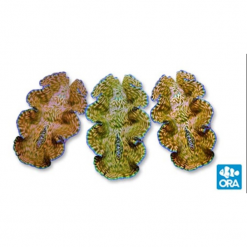
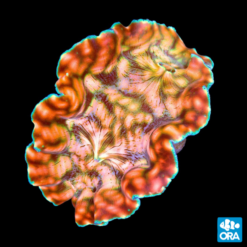
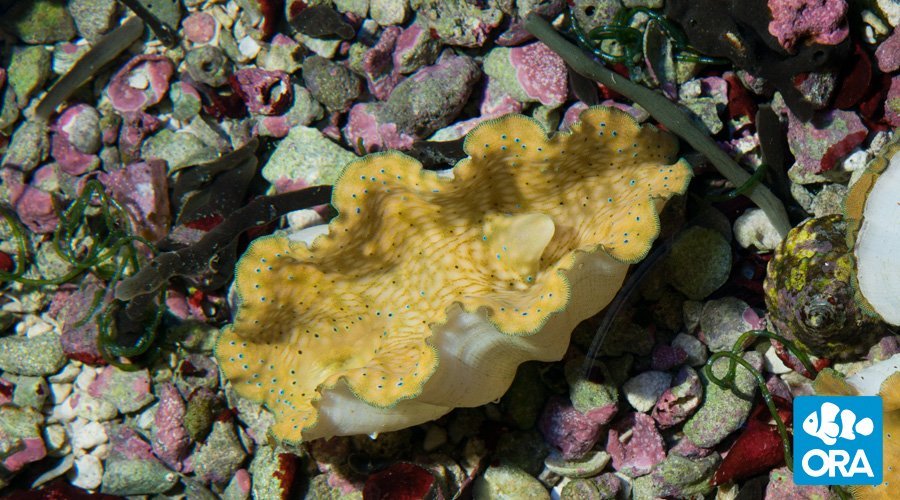
ORA’s juvenile Tridacna gigas clams feature golden brown mantles with shimmering blue-green patterns and radiating spots that intensify under strong reef lighting. As the clam grows, its shell becomes thick and sculpted with fluted ridges—classic indicators of the Gigas species. Each specimen develops unique coloration depending on light spectrum and nutrient balance.
Care & Requirements
The ORA Tridacna Gigas Clam demands stable, pristine reef conditions. A mature specimen requires at least 180–300 gallons of space to ensure stable water chemistry and sufficient lighting intensity. Position the clam on sand or rock where its mantle receives unobstructed light. Maintain strong, indirect flow to aid filtration without causing the mantle to retract.
Lighting: High intensity is critical, ideally 250–350 PAR. Metal halide or full-spectrum LED systems work best. New clams should be acclimated gradually to bright light to prevent bleaching.
Water Chemistry: Maintain calcium 380–450 ppm, alkalinity 8–9 dKH, magnesium 1300–1450 ppm, nitrates 10–30 ppm, and phosphates 0.01–0.1 ppm. Regular testing and supplementation ensure steady growth.
Feeding: Though photosynthetic, juvenile ORA Gigas Clams benefit from live phytoplankton or picoplankton several times per week. As they mature, supplemental feeding becomes less necessary.
Do Gigas Clams need direct feeding?
Juveniles benefit from planktonic foods; adults rely primarily on light and filtration.
How much light does a Tridacna gigas need?
Maintain high PAR values (250–350) with gradual acclimation.
Can Gigas Clams survive in mixed reef tanks?
Yes, if given space and stable parameters.
Tank Mates & Compatibility
Tridacna gigas is peaceful and compatible with most reef-safe fish and invertebrates. Avoid burrowing species or aggressive fish that may disturb its mantle. Ideal companions include tangs, wrasses, and gobies that maintain tank cleanliness without causing irritation.
Is the ORA Gigas Clam reef safe with corals?
Yes, it coexists well and can enhance nutrient cycling.
What tank mates should be avoided?
Avoid large angelfish or butterflyfish that may nip at mantles.
Can two Gigas Clams be kept together?
Only in very large systems (300+ gallons) with ample spacing.
Aquaculture / Availability
ORA’s Tridacna gigas is one of the few captive-bred giant clams available today. Through aquaculture, ORA reduces wild collection pressure on endangered populations. Specimens are sold as hardy juveniles around 2 inches and adapt readily to captive reef environments. Currently, ORA Gigas Clams are consistently aquacultured, with most trade relying on these sustainable sources.
Are ORA Gigas Clams truly captive bred?
Yes, ORA breeds and raises them in controlled aquaculture systems.
How large do ORA Gigas Clams get in captivity?
Typically up to 4 feet under ideal conditions.
Are wild-caught Gigas Clams still traded?
Very rarely; aquacultured ORA specimens dominate the market.
Why Buy From Oceansgarden.com
- Captive-Bred & Sustainable: Many of our fish and invertebrates are captive-bred or sustainably sourced to promote healthy reef ecosystems.
- Expert Care Before Shipping: Every animal is maintained under professional aquarium standards for health, diet, and water quality.
- Live Arrival Guarantee: We stand behind each shipment with a Live Arrival Guarantee for your peace of mind.
- Fast, Reliable Shipping: Orders are packed with proven methods and shipped overnight to ensure safe arrival.
- Transparent Policies: Clear shipping, refund, and guarantee information available on every order page.
- Trusted by Hobbyists: Backed by years of experience and thousands of satisfied marine aquarium keepers across the U.S.
FAQ
Are ORA Tridacna Gigas Clams difficult to care for? Yes, they are best suited for advanced reef keepers due to their high lighting and calcium demands. Stability and space are key to long-term success.
How fast does a Tridacna gigas grow in captivity? Growth rates vary, but juveniles can double in size within the first year under strong lighting and stable chemistry. Mature clams may add several inches annually.
What lighting spectrum works best for Gigas Clams? Full-spectrum reef LEDs or metal halide systems offering strong blue and white light between 10,000–20,000K provide ideal growth and coloration.
Do Gigas Clams filter water in the tank? Yes, they naturally filter particulates and aid in maintaining clarity by removing excess nutrients and plankton from the water column.
Can I keep a Gigas Clam in a 100-gallon tank? Only as a juvenile. Long-term, a 180–300+ gallon system is required to accommodate its size and stability needs.
Are Gigas Clams compatible with SPS and LPS corals? Yes. They coexist well with corals and even benefit overall tank health by helping stabilize nutrient balance.
How long do ORA Gigas Clams live? In ideal reef conditions, they can live for over 40 years, becoming a true centerpiece organism.
Can Gigas Clams reproduce in home aquariums? While rare, spawning behavior may occur in very large, stable systems with mature adults.
| size | 2+ inches |
|---|
Related products