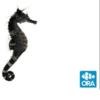
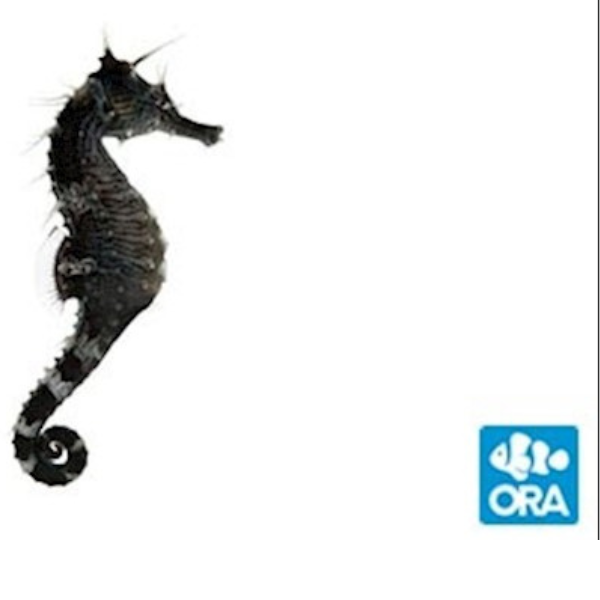

ORA Lined Seahorse : Captive-Bred for Sale
The Captive-Bred: ORA Lined Seahorse (Hippocampus erectus) is a hardy, resilient species ideal for dedicated marine aquarists who want a peaceful, easy-feeding seahorse that thrives in home aquariums. Bred and raised entirely in captivity by ORA, these seahorses are already conditioned to eat frozen Mysis shrimp—removing one of the biggest challenges with wild-caught seahorses. Their calm nature, trained feeding response, and ability to adapt to reef-like conditions make them one of the most rewarding species to keep long-term. Because they’re captive-bred, ORA Lined Seahorses ship and acclimate better than wild counterparts, offering aquarists proven success rates and healthier, stress-resistant specimens.
Key Facts
| Specification | Details |
|---|---|
| Scientific Name | Hippocampus erectus |
| Family | Syngnathidae |
| Origin | Captive-bred in Florida, USA |
| Maximum Size | 7–7.5 inches |
| Purchase Size | 1-3 inches |
| Lifespan | 3–5 years in optimal conditions |
| Care Level | Moderate |
| Minimum Tank Size | 40 gallons per pair |
| Temperament | Peaceful, social |
| Reef Safe | With caution |
| Diet | Frozen Mysis shrimp, enriched frozen plankton |
| Temperature | 72–74 °F (22–23 °C) |
| pH Range | 8.1–8.4 |
| Salinity | 1.020–1.025 specific gravity |
Appearance
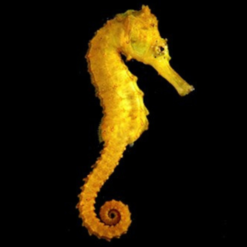
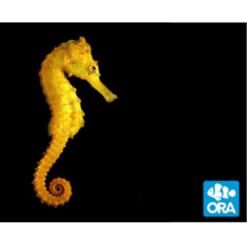
ORA Lined Seahorses display a soft gray, tan, or brown base with characteristic lined or spotted patterning along the body. Color tone can subtly change with mood or environment, showing lighter or darker contrast bands. Adults reach around 7 inches from snout to tail and have strong, prehensile tails used to anchor on live rock, gorgonians, or hitching posts.
Care & Requirements
These captive-bred seahorses thrive in calm, species-specific aquariums with gentle water movement. Maintain stable temperatures around 74 °F, salinity between 1.020 and 1.025, and low to moderate flow to avoid stress. Provide ample vertical structures such as artificial corals or branching rock for hitching. A 30-gallon aquarium comfortably houses a mated pair, with an additional 10 gallons per extra seahorse.
Feeding is simple compared to wild specimens—ORA Lined Seahorses eagerly consume frozen Mysis shrimp 2–3 times per day. Remove leftover food to maintain water quality. Regular testing for ammonia and nitrite is essential since seahorses are sensitive to elevated levels.
Lighting can be moderate, and a mature, stable biological filter helps sustain the required microfauna population. Seahorses prefer gentle companions and steady conditions, making them suitable for intermediate hobbyists seeking a more interactive marine species.
How often should ORA Lined Seahorses be fed?
Feed small portions of frozen Mysis 2–3 times daily, ensuring all food is consumed within a few minutes.
Can they live in a reef tank?
Yes, cautiously—avoid aggressive corals and high-flow zones; they fare best in soft coral or macroalgae sections.
What signs show stress in a lined seahorse?
Rapid breathing, pale coloration, or refusing food indicate stress—check water parameters immediately.
Tank Mates & Compatibility
Seahorses are slow, deliberate feeders and should never be housed with fast or aggressive species. Ideal companions include small gobies, pipefish, cleaner shrimp, and peaceful snails. Avoid clownfish, wrasses, and large crustaceans that may outcompete them for food or nip at their tails.
Pairs or small same-species groups are ideal. They form strong pair bonds and display social behavior when kept with compatible mates. Maintain a calm environment and provide multiple hitching areas to reduce territorial tension.
Can seahorses live with clownfish?
No, most clownfish are too active and aggressive at feeding time, which stresses seahorses.
Are cleaner shrimp safe tank mates?
Yes—small cleaner shrimp are gentle and often coexist peacefully.
Do seahorses need to be kept in pairs?
While singles can thrive, pairs tend to show natural courtship and better feeding response.
Aquaculture / Availability
ORA has been a pioneer in marine aquaculture for over two decades, and their Captive-Bred Lined Seahorse represents one of the most successful seahorse-breeding programs in the hobby. Each specimen is born, raised, and fed in a controlled environment using enriched frozen diets, ensuring disease-free, aquarium-ready fish.
Currently, captive-bred ORA Lined Seahorses are available only seasonally, and many retailers list them as temporarily out of stock due to limited breeding cycles. When available, they remain in high demand because of their hardiness and proven feeding behavior.
Are all ORA Lined Seahorses captive-bred?
Yes—every ORA specimen is tank-raised in Florida facilities, not wild-caught.
Why are they sometimes unavailable?
Limited broodstock and slow reproductive cycles make supply seasonal.
Do captive-bred seahorses ship better than wild ones?
Absolutely—captive-bred individuals acclimate faster and tolerate transport stress far better.
Why Buy From Oceansgarden.com
- Captive-Bred & Sustainable: Many of our fish and invertebrates are captive-bred or sustainably sourced to promote healthy reef ecosystems.
- Expert Care Before Shipping: Every animal is maintained under professional aquarium standards for health, diet, and water quality.
- Live Arrival Guarantee: We stand behind each shipment with a Live Arrival Guarantee for your peace of mind.
- Fast, Reliable Shipping: Orders are packed with proven methods and shipped overnight to ensure safe arrival.
- Transparent Policies: Clear shipping, refund, and guarantee information available on every order page.
- Trusted by Hobbyists: Backed by years of experience and thousands of satisfied marine aquarium keepers across the U.S.
FAQ
How long do ORA Lined Seahorses live in captivity?
With proper care, stable water quality, and a balanced diet, they typically live 3–5 years, sometimes longer in well-maintained systems. Consistent feeding and gentle tank flow are key to longevity.
What is the ideal tank setup for a pair of lined seahorses?
A vertical aquarium of at least 40 gallons with gentle filtration, moderate flow, and plenty of hitching structures like macroalgae or artificial corals. Avoid coarse substrates or strong pumps.
Can ORA Lined Seahorses breed in home aquariums?
Yes, experienced aquarists can observe courtship and brood pouch development, though raising fry requires specialized nursery conditions with live foods such as copepods.
Are lined seahorses reef-safe?
Generally yes—soft corals, gorgonians, and macroalgae are compatible, but avoid stinging or aggressive species like large LPS corals and anemones.
How can I tell if my seahorse is healthy?
A healthy ORA Lined Seahorse will maintain strong color contrast, steady feeding response, upright posture, and active tail-gripping. Lethargy or floating indicates a water quality issue.
Do seahorses change color?
Yes, slight shade shifts occur based on mood, lighting, and environment. This is normal and part of their natural camouflage.
What water parameters should be monitored most closely?
Ammonia and nitrite should always read 0 ppm, nitrate below 20 ppm, and salinity steady at 1.023–1.025. Use a reliable test kit weekly.
How do I introduce ORA Lined Seahorses to a new tank?
Acclimate slowly over 45 minutes using drip acclimation. Dim the lights during introduction to reduce stress and observe feeding within 24 hours.
| size | 1-3 inches |
|---|
Related products