ORA Premium LongFin Snowflake Clownfish Captive-Bred for Sale
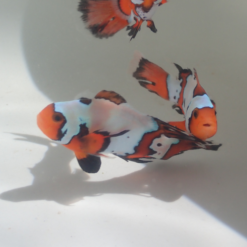
The ORA Premium LongFin Snowflake Clownfish (Amphiprion ocellaris) combines striking coloration with gracefully extended fins that create elegant movement in the water. Captive-bred by Oceans, Reefs & Aquariums (ORA), this peaceful variant is valued for its durability, irregular snowflake-like markings, and strong adaptability to marine environments. Trusted by aquarists worldwide, ORA’s breeding standards ensure disease resistance, stable temperament, and long-term health.
Key Facts
| Specification | Details |
|---|---|
| Scientific Name | Amphiprion ocellaris |
| Family | Pomacentridae |
| Origin | Captive-bred (ORA – Oceans, Reefs & Aquariums) |
| Max Size | Up to 3 inches |
| Purchase Size | 1–2 inches |
| Lifespan | 6–10 years |
| Care Level | Easy |
| Minimum Tank Size | 15 gallons (single) |
| Temperament | Peaceful to semi-aggressive |
| Reef Safe | Yes |
| Diet | Omnivore; accepts flakes, pellets, and frozen foods |
| Temperature | 75–82°F (24–28°C) |
| pH Range | 8.1–8.4 |
| Salinity | 1.020–1.026 |
Appearance
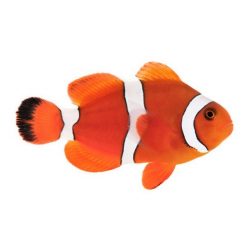
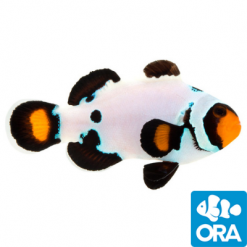
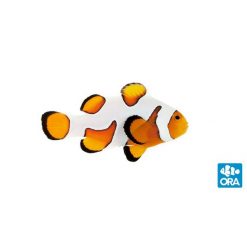
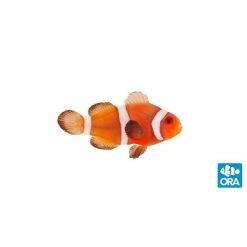
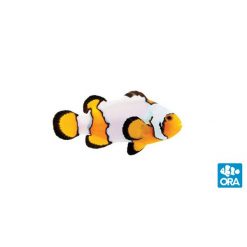
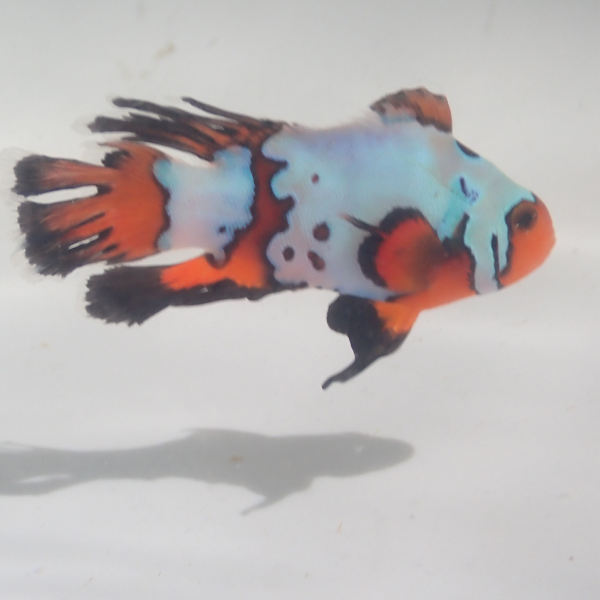
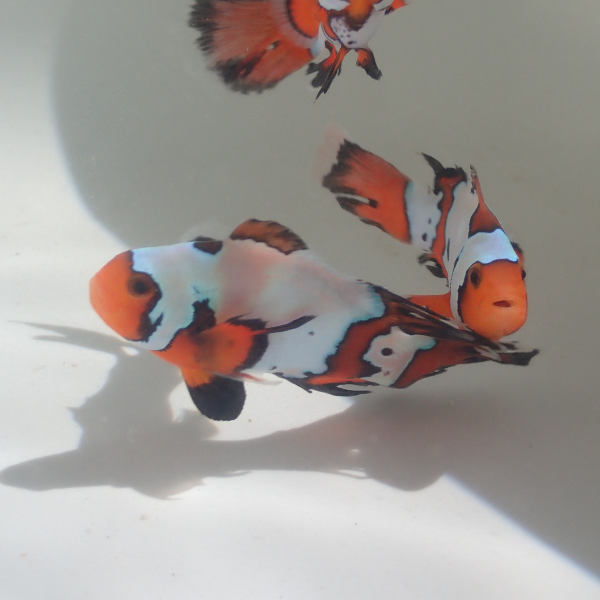
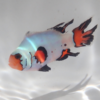
The ORA Premium LongFin Snowflake Clownfish displays vivid red/orange coloration with irregular, stark snowflake-like white bands. Its long, flowing fins give it a soft, feathered look, setting it apart from standard ocellaris varieties. Each fish exhibits a unique pattern, making every specimen distinct in appearance.
Care & Requirements
This hardy, captive-bred clownfish thrives in reef aquariums and tolerates a broad range of stable water conditions. A single specimen does well in a 15-gallon tank, while bonded pairs should have at least 30-40 gallons. Feed a mixed omnivorous diet of marine flakes, pellets, mysis, and brine shrimp two to three times daily for optimal color and energy. Maintain a temperature around 78°F, pH between 8.1–8.4, and moderate water flow. Hosting anemones like Entacmaea quadricolor can encourage natural interaction but is not required.
Is the ORA LongFin Snowflake Clownfish beginner-friendly?
Yes, its captive-bred hardiness makes it ideal for new saltwater keepers.
Does it need an anemone to survive?
No, it adapts well without one but may host anemones or corals if available.
How often should I feed this fish?
Offer small portions 2–3 times daily to maintain health and coloration.
Tank Mates & Compatibility
The ORA LongFin Snowflake Clownfish pairs well with peaceful reef species such as gobies, blennies, cardinals, and wrasses. Avoid aggressive fish like dottybacks or large angelfish that may nip its fins. When housed with compatible species, this clownfish maintains a calm, confident presence in community tanks.
Can two LongFin Snowflake Clownfish live together?
Yes, when introduced as bonded pairs or juveniles.
Are they aggressive toward other fish?
Generally peaceful, showing mild territorial behavior only near their host area.
Will they harm coral or shrimp?
No, they are fully reef-safe and suitable with cleaner shrimp and invertebrates.
Aquaculture/Availability
ORA selectively breeds the LongFin Snowflake Clownfish for enhanced fin length and color definition. These captive-bred specimens are raised under controlled aquaculture conditions, ensuring consistent quality and hardiness. Captive-bred forms are standard for this variety; wild-caught specimens are rarely seen in trade.
Is the ORA LongFin Snowflake sustainably bred?
Yes, ORA follows eco-friendly aquaculture practices to protect wild populations.
Are they available year-round?
Supply depends on ORA breeding cycles, and limited batches may sell quickly.
Do captive-bred fish live longer than wild ones?
Typically yes, due to controlled environments and reduced stress.
Why Buy From Oceansgarden.com
- Captive-Bred & Sustainable: Many of our fish and invertebrates are captive-bred or sustainably sourced to promote healthy reef ecosystems.
- Expert Care Before Shipping: Every animal is maintained under professional aquarium standards for health, diet, and water quality.
- Live Arrival Guarantee: We stand behind each shipment with a Live Arrival Guarantee for your peace of mind.
- Fast, Reliable Shipping: Orders are packed with proven methods and shipped overnight to ensure safe arrival.
- Transparent Policies: Clear shipping, refund, and guarantee information available on every order page.
- Trusted by Hobbyists: Backed by years of experience and thousands of satisfied marine aquarium keepers across the U.S.
FAQ
What makes the ORA LongFin Snowflake Clownfish different from regular Snowflake Clownfish?
The LongFin variant has elongated, ribbon-like fins and irregular white patterns. It’s bred for enhanced appearance, movement, and adaptability.
What is the ideal tank setup for this clownfish?
Provide at least 20 gallons for a pair, live rock for territory, moderate flow, and reef lighting. Maintain pH 8.1–8.4 and salinity between 1.020–1.026.
Can it host anemones or corals?
Yes, it may naturally host Bubble Tip Anemones (Entacmaea quadricolor) but will also adopt coral or rock surfaces.
How fast does the ORA LongFin Snowflake Clownfish grow?
They reach their adult size of around 3 inches within a year under consistent feeding and stable conditions.
What should I feed for best color and health?
Offer marine flakes, pellets, mysis, and brine shrimp. Color-enhancing formulas with carotenoids improve vibrancy.
Are ORA LongFin Snowflake Clownfish compatible with other clownfish?
Avoid mixing species in small tanks; if housed together, provide ample space (40+ gallons) to reduce aggression.
Do they require special lighting or filtration?
Standard reef lighting and quality filtration are sufficient; ensure stable oxygenation and minimal nitrate buildup.
How can I tell if two LongFin Snowflakes are pairing?
Paired fish display synchronized swimming and gentle fin contact, signaling social bonding.
Threadfins will have filamented strands that extend from the tip of the fin/s but don’t connect
Longfins will have a fully connected fin. The patterning on our longfins will appear jagged but are in-tact.
Veilfins will have smooth long flowing fins and what most hobbyists associate with a “longfin clownfish” these use different genetics from our longfin production
| size | 1-2 inches |
|---|
Related products