
ORA Trochus Snail Captive Bred – A Sustainable Algae Cleaner
The ORA Trochus Snail Captive Bred (Rochia nilotica) offers reef aquarists a sustainable and effective cleanup crew member that thrives in established saltwater tanks. Bred and raised in controlled conditions, these hardy herbivores provide a reliable alternative to wild-caught snails while helping reduce pressure on natural populations. Known for their algae-eating efficiency, they actively graze on film algae, diatoms, cyanobacteria, and hair algae, keeping aquarium surfaces clean without harming corals or invertebrates. With ORA’s proven aquaculture quality, these snails ship healthier, adapt faster, and contribute to a balanced reef ecosystem.
Key Facts
| Specification | Details |
|---|---|
| Scientific Name | Rochia nilotica |
| Family | Trochidae |
| Origin | Indo-Pacific (aquacultured at ORA facilities) |
| Max Size | Up to 5 inches |
| Purchase Size | 0.5–1.5 inch |
| Lifespan | 3–5 years in captivity |
| Care Level | Easy |
| Minimum Tank Size | 20 gallons |
| Temperament | Peaceful |
| Reef Safe | Yes |
| Diet | Herbivorous; algae grazer |
| Temperature | 75–80°F |
| pH Range | 7.7–8.5 |
| Salinity | 1.023–1.026 specific gravity |
Appearance
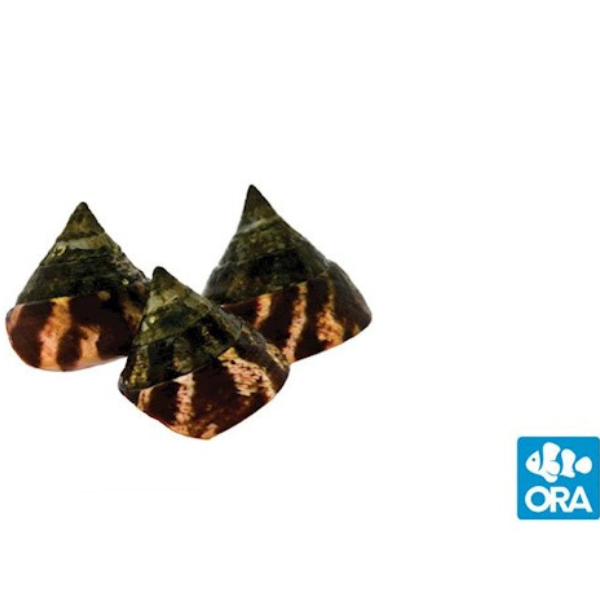
The ORA Trochus Snail has a cone-shaped shell with alternating bands of dark and light coloration. The shell is thick and ridged, offering protection, while its foot is strong and mobile, allowing it to graze across rocks and glass effectively.
Care & Requirements
Caring for ORA Trochus Snails is straightforward, making them suitable for both beginner and advanced reef keepers. They thrive in stable reef conditions with moderate flow and established algae growth. In most tanks, supplemental feeding is unnecessary as they obtain nutrition from nuisance algae. A recommended minimum tank size is 20 gallons.
They are reef safe and compatible with most peaceful fish and invertebrates, though caution is needed with predatory species such as pufferfish. Hermit crabs may also attempt to steal their shells, so providing spare shells can reduce risk.
- How many ORA Trochus Snails should I keep in a 20-gallon tank? One to two snails provide adequate algae control.
- Do ORA Trochus Snails need additional food? In most aquariums, natural algae growth is sufficient. If algae is scarce supplement feed them algae wafers.
- Can ORA Trochus Snails survive if flipped over? Yes, they can usually right themselves, unlike many other snail species.
Tank Mates & Compatibility
ORA Trochus Snails mix well with peaceful reef fish, soft corals, and other cleanup crew members like cerith snails. They should not be housed with snail-eating predators such as triggers, puffers, or large wrasses. Avoid high densities of hermit crabs, as they may harass snails for their shells.
- Are ORA Trochus Snails reef safe with corals? Yes, they are completely reef safe and will not damage corals.
- Can ORA Trochus Snails live with shrimp and other invertebrates? Yes, they coexist well with shrimp, crabs (excluding predators), and filter feeders.
- What fish should not be housed with ORA Trochus Snails? Avoid predatory species such as pufferfish, triggers, and some wrasses.
Aquaculture/Availability
ORA Trochus Snails are consistently captive bred at ORA’s Marshall Island Mariculture Farm. These aquacultured specimens are hardy, disease-free, and sustainably produced, making them superior to wild-caught alternatives. Availability may vary depending on breeding cycles and demand.
- Are ORA Trochus Snails always captive bred? Yes, all ORA Trochus Snails are bred in controlled aquaculture facilities.
- Why choose captive-bred snails over wild-caught? Captive-bred snails adapt better to aquariums and help reduce wild collection.
- Are ORA Trochus Snails available year-round? Availability can fluctuate depending on breeding cycles and demand.
Why Buy From Oceansgarden.com
- Captive-Bred & Sustainable: Many of our fish and invertebrates are captive-bred or sustainably sourced to promote healthy reef ecosystems.
- Expert Care Before Shipping: Every animal is maintained under professional aquarium standards for health, diet, and water quality.
- Live Arrival Guarantee: We stand behind each shipment with a Live Arrival Guarantee for your peace of mind.
- Fast, Reliable Shipping: Orders are packed with proven methods and shipped overnight to ensure safe arrival.
- Transparent Policies: Clear shipping, refund, and guarantee information available on every order page.
- Trusted by Hobbyists: Backed by years of experience and thousands of satisfied marine aquarium keepers across the U.S.
FAQ
Do ORA Trochus Snails clean sand in addition to rocks and glass?
Trochus snails primarily graze on algae covering rocks, glass, and equipment but generally avoid sandbeds. For sand cleaning, they pair well with cerith snails or nassarius snails.
How long do ORA Trochus Snails live in an aquarium?
In well-maintained reef aquariums with stable parameters, ORA Trochus Snails typically live 3–5 years. Lifespan can shorten if housed with predators or if food sources are insufficient.
What is the ideal water flow for ORA Trochus Snails?
They thrive in moderate flow, which keeps algae growth steady and helps them graze efficiently. Extremely strong flow can dislodge them, while stagnant zones may limit food availability.
Can ORA Trochus Snails reproduce in home aquariums?
Yes, ORA Trochus Snails can spawn in stable reef systems. While survival of juveniles is limited due to filtration and predation, some hobbyists report successful small populations developing.
How do ORA Trochus Snails compare to other cleanup crew snails?
Trochus snails are unique in being able to flip themselves over, a key advantage over astrea snails. They are also more versatile algae grazers than turbos, with less risk of knocking over corals.
What signs show an ORA Trochus Snail is stressed or unhealthy?
Warning signs include inactivity, falling off glass, or a gaping operculum. Poor water quality or lack of algae are common causes. Stable parameters usually restore normal activity.
Related products