
ORA Lightning Maroon Clownfish Pair for Sale
The ORA Lightning Maroon Clownfish is a captive-bred variety of Premnas biaculeatus, developed by ORA (Oceans, Reefs & Aquariums) for aquarists seeking a hardy and visually unique marine fish. Recognized for its bold red coloration and lightning-like white patterns, this semi-aggressive species thrives in mature reef aquariums where stability and proper territory are maintained. ORA’s breeding ensures superior disease resistance and adaptability compared to wild-caught fish, offering aquarists a healthier, tank-acclimated choice. Limited seasonal availability makes these fish a sought-after addition for collectors and experienced hobbyists looking to showcase a premium ORA-bred specimen.
This listing is for a already Bonded Male/Female Pair.
Key Facts
| Specification | Details |
|---|---|
| Scientific Name | Premnas biaculeatus |
| Family | Pomacentridae |
| Origin | Captive-bred by ORA, derived from Maroon Clownfish |
| Maximum Size | 6 inches |
| Purchase Size | 1–2 inches |
| Lifespan | 15–20 years |
| Care Level | Moderate |
| Minimum Tank Size | 30 gallons (single), 50+ gallons (pair) |
| Temperament | Semi-aggressive to aggressive |
| Reef Safe | Yes, with caution |
| Diet | Omnivore – mysis, brine shrimp, marine pellets |
| Temperature | 75–80°F |
| pH Range | 7.7–8.5 |
| Salinity | 1.020–1.026 SG |
Appearance
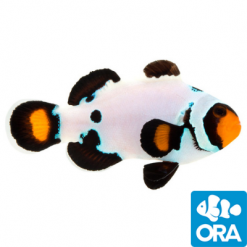
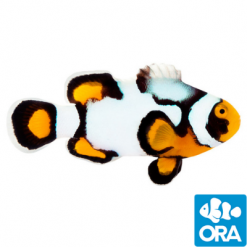
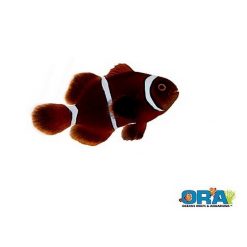
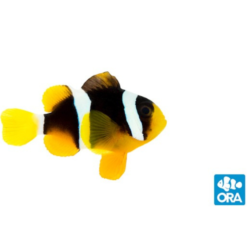
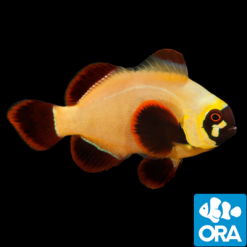
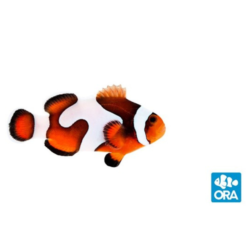
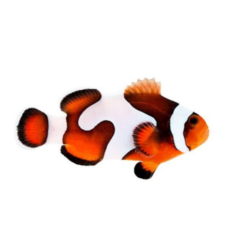
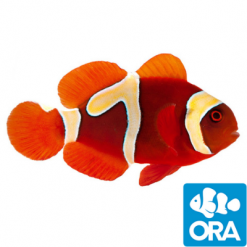
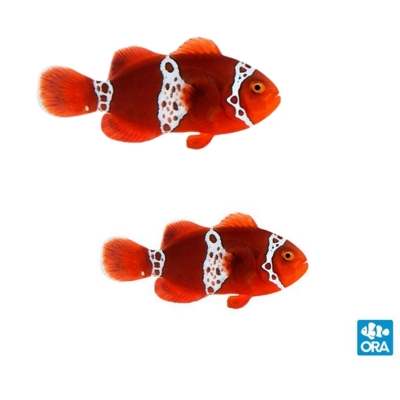
The ORA Lightning Maroon Clownfish displays a deep maroon body marked by irregular white “lightning bolt” stripes unique to each fish. The intensity of its red coloration deepens with maturity, and females often exhibit broader white markings than males. Its spiny cheek plates and vivid contrast pattern make it one of the most recognizable designer clownfish varieties available.
Care & Requirements
Provide at least a 30-gallon tank for a single ORA Lightning Maroon Clownfish or a 55-gallon tank for a pair. Stable reef conditions are essential, with live rock to create hiding areas and natural territorial boundaries. Feed a mixed diet of frozen mysis, brine shrimp, algae-based flakes, and high-quality pellets 2–3 times daily. These clownfish readily host anemones, particularly the Bubble Tip (Entacmaea quadricolor), which can help moderate aggression. Avoid copper-based medications and maintain consistent reef parameters: temperature 75–80°F, salinity 1.020–1.026 SG, and pH 7.7–8.5.
How long do Lightning Maroon Clownfish live in captivity?
Up to 15–20 years with proper diet and stable reef parameters.
Do they need an anemone to survive?
No, but pairing with a Bubble Tip Anemone enhances natural behavior and territorial security.
Are Lightning Maroon Clownfish beginner-friendly?
They are better suited for intermediate hobbyists due to their territorial nature.
Tank Mates & Compatibility
The ORA Lightning Maroon Clownfish can be territorial, especially when hosting an anemone or paired. Keep them with other robust species such as wrasses, dwarf angelfish, and tangs. Avoid housing with other clownfish species or timid tank mates. Introduce them last to reduce dominance disputes.
Can I keep two Lightning Maroon Clownfish together?
Only if introduced as a mated ORA pair; unrelated individuals may fight.
What fish should be avoided with Maroon Clownfish?
Avoid smaller gobies, firefish, or peaceful species that cannot withstand aggression.
Will they harm corals?
No, they are reef-safe and will not nip at coral polyps.
Aquaculture / Availability
ORA has successfully captive-bred the Lightning Maroon Clownfish, making it more resilient and adaptable than wild-caught specimens. Availability fluctuates due to limited breeding schedules and high demand, with most sales offered as singles or mated pairs.
Are ORA Lightning Maroon Clownfish always captive-bred?
Yes, ORA exclusively breeds this variant in controlled aquaculture facilities.
Why are they sometimes out of stock?
Breeding cycles and high collector demand often lead to temporary scarcity.
Do captive-bred fish adjust faster to aquariums?
Yes, ORA-bred specimens acclimate quickly and show reduced disease risk.
Why Buy From Oceansgarden.com
- Captive-Bred & Sustainable: Many of our fish and invertebrates are captive-bred or sustainably sourced to promote healthy reef ecosystems.
- Expert Care Before Shipping: Every animal is maintained under professional aquarium standards for health, diet, and water quality.
- Live Arrival Guarantee: We stand behind each shipment with a Live Arrival Guarantee for your peace of mind.
- Fast, Reliable Shipping: Orders are packed with proven methods and shipped overnight to ensure safe arrival.
- Transparent Policies: Clear shipping, refund, and guarantee information available on every order page.
- Trusted by Hobbyists: Backed by years of experience and thousands of satisfied marine aquarium keepers across the U.S.
FAQ
What is the ideal tank setup for an ORA Lightning Maroon Clownfish?
A 30-gallon or larger saltwater aquarium with live rock, stable water parameters, and moderate flow supports this species. Include hiding spots and open swimming areas to balance activity and aggression.
How can I reduce aggression in a pair of Maroon Clownfish?
Use a tank divider during initial introductions, ensure a large enough space, and avoid placing other clownfish species in the same system.
What should I feed my ORA Lightning Maroon Clownfish?
Provide a diet rich in marine protein and algae – mysis shrimp, brine shrimp, high-quality pellets, and spirulina-enriched flakes. Feed small portions 2–3 times daily.
Can Lightning Maroon Clownfish live with cleaner shrimp?
Yes, though some individuals may display territorial behavior near their hosting anemone; monitor early interactions closely.
Do they change color or pattern as they mature?
Yes, coloration deepens from bright red to darker maroon as they age, and lightning markings become more defined.
Are ORA Lightning Maroon Clownfish reef safe with LPS and SPS corals?
Yes, they are coral-safe and often found coexisting peacefully with various reef corals.
How do ORA-bred fish differ from wild-caught Maroon Clownfish?
Captive-bred fish are more disease-resistant, less stressed, and adapted to aquarium foods, making them easier to maintain long-term.
Can they be kept in nano tanks?
Not recommended. Their territorial nature and adult size require at least a 30-gallon tank to prevent aggression and stress.
| size | 1.5-2.5 inches |
|---|
Related products