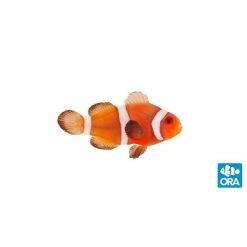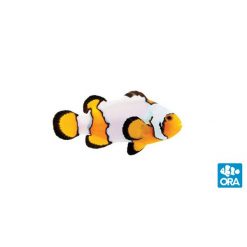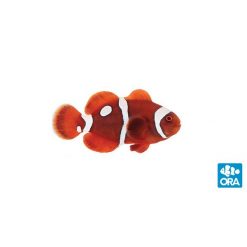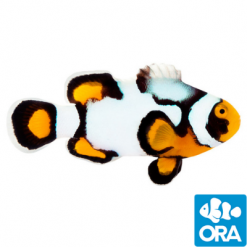
ORA Black Storm Clownfish Captive-Bred Pair for Sale
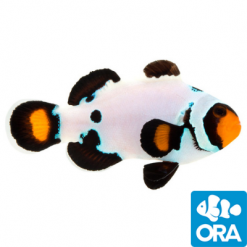
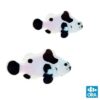
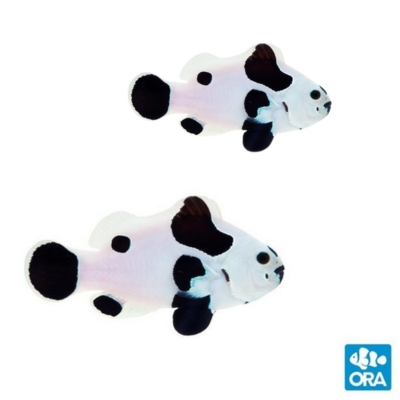
The ORA Black Storm Clownfish (Amphiprion ocellaris) is a captive-bred designer clownfish prized for its bold black-and-white “panda” pattern and hardy nature. Unlike wild-caught specimens, ORA’s aquacultured Black Storms adapt quickly to aquarium life, are less prone to disease, and thrive in reef or fish-only setups. Beginners and advanced aquarists alike choose this strain for its peaceful temperament, long lifespan, and proven compatibility with a wide range of marine species.
This listing is for a Male and Female already bonded pair, will be shipped with this single purchase.
Key Facts
| Specification | Details |
|---|---|
| Scientific Name | Amphiprion ocellaris |
| Family | Pomacentridae |
| Origin | Captive-bred |
| Max Size | 3 inches |
| Purchase Size | 1–2 inches |
| Lifespan | Up to 10 years |
| Care Level | Easy |
| Minimum Tank Size | 15 gallons |
| Temperament | Peaceful, semi-aggressive when older |
| Reef Safe | Yes |
| Diet | Omnivore: flakes, pellets, mysis, brine |
| Temperature | 72–78°F |
| pH Range | 7.8–8.5 |
| Salinity | 1.020–1.025 |
Appearance
The ORA Black Storm Clownfish features a unique black-and-white panda pattern with irregular patches across a bright white body. Its face remains fully white with large black eyes, and no two individuals display the same markings. Juveniles may appear darker before developing the distinct panda coloration as they mature.
Care & Requirements
The ORA Black Storm Clownfish is well-suited for both new and experienced aquarists. A 15-gallon tank is recommended for a single specimen, or a 20 gallon for a bonded pair, with larger tanks offering reduced territorial behavior. Stable water conditions are essential, with temperatures between 72–78°F, pH 7.8–8.5, and salinity of 1.020–1.025. These omnivores thrive on a varied diet of high-quality pellets, flakes, and frozen mysis or enriched brine shrimp. Feeding small portions 2–3 times daily keeps them active and healthy. While hosting an anemone is not required, they often accept Bubble Tip Anemones or similar species as a natural home.
Do ORA Black Storm Clownfish need anemones to survive?
No, they do not require anemones, though they may naturally host one if available.
What is the ideal tank size for a pair of Black Storm Clownfish?
At least 20 gallons is recommended, with larger tanks reducing territorial behavior.
How often should I feed a Black Storm Clownfish?
Small feedings 2–3 times daily are ideal for best health and growth.
Tank Mates & Compatibility
Peaceful and reef safe, ORA Black Storm Clownfish can coexist with gobies, wrasses, blennies, and cardinalfish. They may become semi-aggressive if defending a host anemone but generally remain calm when paired with compatible species. Avoid housing them with highly aggressive fish such as large triggers or predatory wrasses.
Can Black Storm Clownfish live in groups?
They do best in pairs; groups can lead to aggression in confined spaces.
Are they reef safe with corals and invertebrates?
Yes, they are completely reef safe and compatible with coral-dominated tanks.
Do they need to be purchased as bonded pairs?
Not required, but ORA often offers pre-bonded pairs for quicker acclimation.
Aquaculture/Availability
The ORA Black Storm Clownfish is consistently available as a captive-bred specimen, with production cycles ensuring a sustainable and ethical alternative to wild-caught clownfish. As an aquacultured variety, these fish adapt quickly to prepared foods and show higher survival rates, making them a reliable choice for home aquariums. Availability may fluctuate due to breeding schedules, so purchasing when in stock ensures access to this high-demand variety.
Are ORA Black Storm Clownfish always captive-bred?
Yes, ORA exclusively produces captive-bred clownfish.
Is availability consistent year-round?
Availability may fluctuate due to breeding cycles and high demand.
Why choose captive-bred over wild-caught clownfish?
Captive-bred clownfish adapt better, resist disease, and support sustainable aquaculture.
Why Buy From Oceansgarden.com
- Captive-Bred & Sustainable: Many of our fish and invertebrates are captive-bred or sustainably sourced to promote healthy reef ecosystems.
- Expert Care Before Shipping: Every animal is maintained under professional aquarium standards for health, diet, and water quality.
- Live Arrival Guarantee: We stand behind each shipment with a Live Arrival Guarantee for your peace of mind.
- Fast, Reliable Shipping: Orders are packed with proven methods and shipped overnight to ensure safe arrival.
- Transparent Policies: Clear shipping, refund, and guarantee information available on every order page.
- Trusted by Hobbyists: Backed by years of experience and thousands of satisfied marine aquarium keepers across the U.S.
FAQ
How big do ORA Black Storm Clownfish get?
They typically reach a maximum size of about 3 inches, making them suitable for medium-sized aquariums starting at 20 gallons.
How long do Black Storm Clownfish live in captivity?
With proper care, they can live up to 10 years, sometimes longer, especially in stable reef environments.
What do ORA Black Storm Clownfish eat?
They are omnivores that readily accept pellets, flakes, mysis shrimp, and enriched frozen foods. Feeding variety ensures strong coloration and health.
Can Black Storm Clownfish be kept with other clownfish species?
It is not recommended to mix different clownfish species in smaller tanks, as territorial disputes can occur.
Do ORA Black Storm Clownfish require a specific type of anemone?
No specific anemone is required, but they often host Bubble Tip Anemones if provided.
Are they suitable for beginner aquarists?
Yes, their hardy nature, adaptability, and disease resistance make them one of the best beginner saltwater fish.
What makes the ORA Black Storm different from Snowflake or Mocha clownfish?
The Black Storm has an exaggerated panda pattern with bold black patches, whereas Snowflake and Mocha morphs have different coloration and markings.
Do Black Storm Clownfish ship well?
Yes, being captive-bred, they acclimate and ship better than wild-caught fish, reducing losses during transit.
| size | 1-2 inches |
|---|
Related products