ORA Kamohara Blenny – Captive Bred for Sale
The ORA Kamohara Blenny (Meiacanthus kamoharai) is a captive-bred fang blenny known for its clean black-and-white pattern and peaceful temperament. Many aquarists ask, How big are Kamohara Blenny? Adults typically grow to about 4–5 inches. Another common question is, Is the Kamohara Blenny reef safe? Yes, it coexists well with corals and invertebrates. Hobbyists also wonder, What size tank does a Kamohara Blenny need? A 30 gallon tank with structured rockwork provides the space they need. For diet, What do Kamohara Blennies eat? They adapt easily to prepared foods such as pellets and frozen shrimp. Finally, people ask, Are Kamohara Blennies venomous? They have small fangs with mild venom used for defense, but they pose no risk when handled carefully.
| Specification | Details |
|---|---|
| Scientific Name | Meiacanthus kamoharai |
| Family | Blenniidae |
| Origin | Southern Japan, captive bred worldwide |
| Adult Size | 4–5 inches (10–12 cm) |
| Lifespan | 5–7 years in captivity |
| Minimum Tank Size | 30 gallons |
| Temperament | Peaceful, may defend territory |
| Reef Safe | Yes |
| Diet | Omnivore, pellets, mysis, brine, seafood |
| Temperature | 75–82°F (24–28°C) |
| pH Range | 7.8–8.5 |
| Salinity | 1.020–1.026 specific gravity |
Appearance
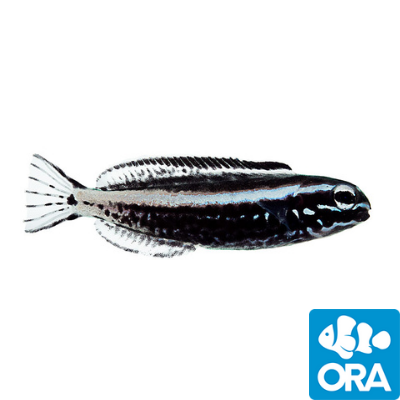
The ORA Kamohara Blenny features a sleek black body accented by a sharp horizontal white stripe. Juveniles often display faint blue highlights that fade with maturity, leaving the adult’s bold, minimalist look. Its slim, elongated body shape allows it to hover gracefully in the water column, making it a distinctive visual addition to reef aquariums.
Care & Requirements
To thrive, the ORA Kamohara Blenny should be housed in a 30-gallon or larger aquarium with plenty of live rock. These structures provide the caves and ledges the fish uses for perching and retreat. Stable tropical water conditions are important: maintain 75–82°F, pH between 7.8–8.5, and salinity of 1.020–1.026.
Feeding should be frequent, as their metabolism is high. Offer 2–3 small meals per day consisting of marine pellets, frozen mysis or brine shrimp, and finely chopped seafood. Captive-bred individuals readily take prepared foods, making them easier to maintain than wild-caught blennies.
Behaviorally, Kamohara Blennies are active and inquisitive. Unlike benthic blennies that remain on the substrate, this species is often seen midwater, hovering near rockwork. While generally peaceful, they may guard small territories if kept with similar-shaped fish.
- Do Kamohara Blennies need live rock? Yes, it provides shelter and perching areas.
- How often should they be fed? 2–3 times daily.
- Can they tolerate temperature swings? They adapt but remain healthiest in stable ranges.
Tank Mates & Compatibility
This blenny is well-suited for peaceful reef aquariums and mixes easily with clownfish, cardinalfish, wrasses, and firefish. Invertebrates such as shrimp, snails, and corals are safe from predation.
Caution should be taken when housing them with other fang blennies or fish of similar body shape, as competition may lead to territorial disputes. Large predatory species should also be avoided, as they may see smaller blennies as prey.
- Are Kamohara Blennies aggressive? They are peaceful but may defend space from similar species.
- Do they damage corals? No, they ignore corals entirely.
- What fish should be avoided? Predatory species such as lionfish or groupers.
Aquaculture/Availability
The ORA Kamohara Blenny is produced exclusively through aquaculture. Unlike many marine fish, wild collection is not required outside Japan, ensuring a sustainable supply for aquarists. Captive-bred individuals are already accustomed to aquarium conditions and readily eat prepared foods, making them easier to keep. Consistent availability also reduces pressure on wild populations.
- Are all available Kamohara Blennies captive bred? Yes, they are only available captive bred outside Japan.
- Why choose aquacultured fish? They ship reliably, adjust quickly, and support sustainable aquarium practices.
Why Buy From Oceansgarden.com
- Captive-Bred & Sustainable: Many of our fish and invertebrates are captive-bred or sustainably sourced to promote healthy reef ecosystems.
- Expert Care Before Shipping: Every animal is maintained under professional aquarium standards for health, diet, and water quality.
- Live Arrival Guarantee: We stand behind each shipment with a Live Arrival Guarantee for your peace of mind.
- Fast, Reliable Shipping: Orders are packed with proven methods and shipped overnight to ensure safe arrival.
- Transparent Policies: Clear shipping, refund, and guarantee information available on every order page.
- Trusted by Hobbyists: Backed by years of experience and thousands of satisfied marine aquarium keepers across the U.S.
FAQ
Do Kamohara Blennies jump out of tanks?
Yes, like many reef fish they may jump, so a secure lid is recommended.
What are signs of stress in a Kamohara Blenny?
Loss of appetite, excessive hiding, or faded coloration can indicate stress.
Can Kamohara Blennies breed in captivity?
Pairs may spawn, but fry survival requires specialized rearing conditions.
How should a Kamohara Blenny be acclimated?
A slow drip acclimation over 30–45 minutes helps them adjust to tank water.
Are Kamohara Blennies confused with other species?
They can resemble other fang blennies, but their bold white stripe is distinctive.
What is the lifespan of a Kamohara Blenny?
Typically 5–7 years when cared for properly.
Do they have any known diseases?
They are hardy but still susceptible to common marine ailments like ich if water quality declines.
Is their venom dangerous to aquarists?
The venom is mild and only a defensive tool; they are safe to handle responsibly.
| size | .5-2 inches |
|---|
Related products