ORA Striped Dottyback Captive-Bred for Sale
The ORA Striped Dottyback Captive-Bred (Pseudochromis sankeyi) is a hardy black-and-white marine fish with a semi-aggressive temperament that adapts well to reef aquariums. Is the ORA Striped Dottyback reef safe? Yes, it is considered reef safe and even helps control bristleworm populations. How big do striped dottybacks get? This species reaches about 3 inches in adulthood. What tank size is best for a striped dottyback? A single fish does well in 30 gallons, though more space reduces territorial behavior. What does the ORA Striped Dottyback eat? They are carnivores and readily accept a variety of prepared aquarium foods. How difficult are they to keep? Their hardiness makes them manageable for aquarists with moderate experience.
| Specification | Details |
|---|---|
| Scientific Name | Pseudochromis sankeyi |
| Family | Pseudochromidae |
| Origin | Red Sea, Gulf of Aden |
| Adult Size | Up to 3 inches |
| Lifespan | 5–7 years |
| Minimum Tank Size | 30 gallons |
| Temperament | Semi-aggressive |
| Reef Safe | Yes |
| Diet | Carnivore – frozen mysis, brine shrimp, pellets, flakes |
| Temperature | 77–82°F |
| pH Range | 8.1–8.4 |
| Salinity | 1.020–1.026 |
Appearance
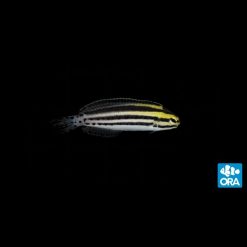
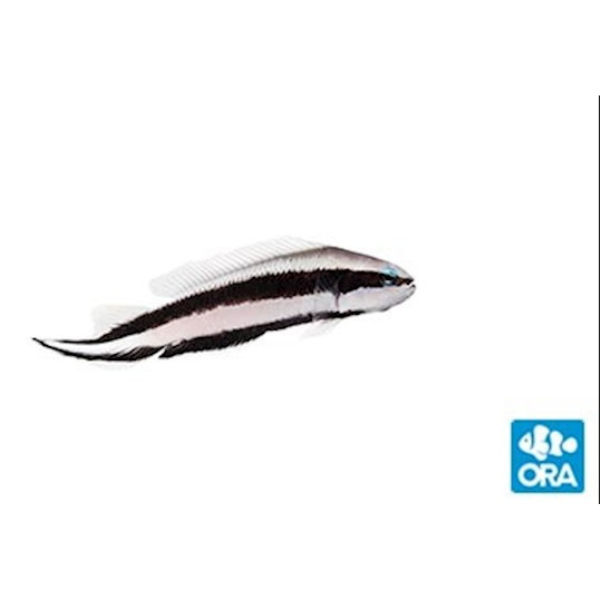
The ORA Striped Dottyback has a bold black-and-white striped pattern running from head to tail, giving it a striking resemblance to a zebra. Transparent dorsal and caudal fins frame its compact body, making it visually distinct in reef tanks. The stripes remain vivid throughout the fish’s lifespan, creating a consistent contrast in display aquariums.
Care & Requirements
The ORA Striped Dottyback thrives in tanks of at least 30 gallons with plenty of live rock to provide caves and crevices for hiding. While semi-aggressive, they coexist with many reef-safe fish when introduced carefully. Aquascaping should mimic their natural environment, offering secure territories to reduce stress. Their diet is straightforward, as they accept frozen mysis shrimp, brine shrimp, high-quality pellets, and flakes without difficulty. These carnivorous habits also benefit reef tanks by helping to control bristleworm populations. Water quality should be stable within 77–82°F, pH 8.1–8.4, and salinity 1.020–1.026. Like other dottybacks, they are strong jumpers, so a tight-fitting lid is essential.
Are striped dottybacks good for pest control? Yes, they help manage bristleworm populations in reef tanks.
Can multiple striped dottybacks be kept together? Only if introduced at the same time in a very large tank, as they are territorial.
Do they hide a lot? Initially, they may retreat into rockwork, but they become more active as they acclimate.
Tank Mates & Compatibility
The ORA Striped Dottyback does best with semi-aggressive or similarly sized fish that can hold their own. Suitable companions include clownfish, wrasses, and tangs. Avoid housing them with very timid species like firefish or with smaller ornamental shrimp, which may be seen as prey. When kept with other dottybacks, only introduce them together in larger aquariums to reduce territorial conflict. Proper planning of tank mates ensures a balanced community where the striped dottyback can display its natural behavior without issues.
Can striped dottybacks live with shrimp? Small ornamental shrimp may be at risk, so caution is advised.
Do they get along with clownfish? Yes, they are generally compatible when space is adequate.
Are striped dottybacks aggressive? They are semi-aggressive, defending territories but not overly hostile in reef setups.
Aquaculture/Availability
The ORA Striped Dottyback Captive-Bred is consistently available through aquaculture. Being raised in controlled conditions, these fish are more resilient and adapt quickly to aquarium environments. Captive breeding also supports reef conservation by reducing pressure on natural populations while ensuring a steady supply for aquarists. ORA’s focus on sustainability makes these fish a reliable and eco-friendly choice for reef tanks.
Are all ORA Striped Dottybacks captive-bred? Yes, ORA exclusively produces captive-bred specimens.
Why choose a captive-bred dottyback? They adapt better to aquariums, show improved health, and support reef sustainability.
Do captive-bred dottybacks cost more? They are often similarly priced but offer greater long-term reliability and survival.
Why Buy From Oceansgarden.com
- Captive-Bred & Sustainable: Many of our fish and invertebrates are captive-bred or sustainably sourced to promote healthy reef ecosystems.
- Expert Care Before Shipping: Every animal is maintained under professional aquarium standards for health, diet, and water quality.
- Live Arrival Guarantee: We stand behind each shipment with a Live Arrival Guarantee for your peace of mind.
- Fast, Reliable Shipping: Orders are packed with proven methods and shipped overnight to ensure safe arrival.
- Transparent Policies: Clear shipping, refund, and guarantee information available on every order page.
- Trusted by Hobbyists: Backed by years of experience and thousands of satisfied marine aquarium keepers across the U.S.
FAQ
Do striped dottybacks jump out of aquariums? Yes, they are known jumpers and require a secure, tight-fitting lid to prevent escape.
What are signs of stress in a striped dottyback? Common signs include hiding for prolonged periods, faded coloration, or refusal to eat.
How do you acclimate an ORA Striped Dottyback? Use a slow drip-acclimation process over 45–60 minutes to avoid shock from parameter differences.
Can striped dottybacks breed in captivity? While captive breeding is possible, it requires a pair and controlled conditions; most hobbyists do not attempt it.
How do ORA Striped Dottybacks differ from wild-caught ones? They are less aggressive, more adaptable to prepared foods, and healthier overall.
Could a striped dottyback be confused with another species? Yes, they are sometimes mistaken for Springeri Dottybacks, but the striped form has continuous black-and-white lines.
| size | 2-3 inches |
|---|
Related products