ORA Hippopus Clam for Sale
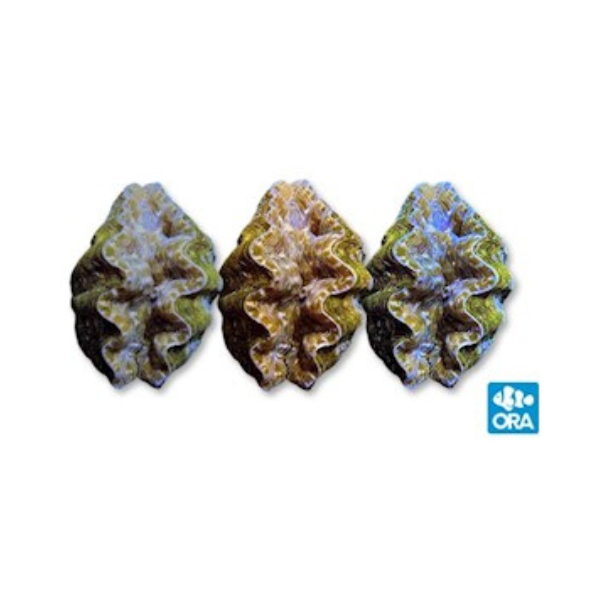
The ORA Hippopus Clam (Hippopus hippopus) is a hardy, aquacultured clam prized by reef keepers for its reef safety, ease of care, and striking patterned shell. Unlike more delicate clam species, the ORA Hippopus Clam thrives in stable aquarium systems and adapts well to sandbed placement. Because ORA aquacultures these clams, hobbyists benefit from sustainable practices, disease resistance, and improved survival rates during shipping.
Key Facts
| Specification | Details |
|---|---|
| Scientific Name | Hippopus hippopus |
| Family | Cardiidae |
| Origin | Indo-Pacific |
| Max Size | 12-30 in |
| Purchase Size | 2-3 inches |
| Lifespan | Decades with proper care |
| Care Level | Moderate |
| Minimum Tank Size | 30 gallons for Juvenile, 100+ gallons for Adult |
| Temperament | Peaceful |
| Reef Safe | Yes |
| Diet | Photosynthetic, occasional phytoplankton |
| Temperature | 75–78 °F |
| pH Range | 8.1–8.4 |
| Salinity | 1.024–1.026 |
Appearance
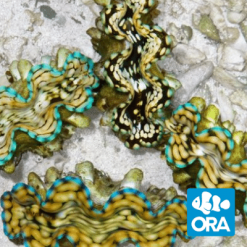
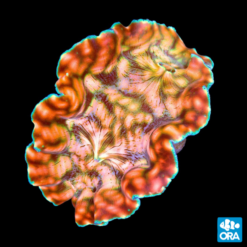
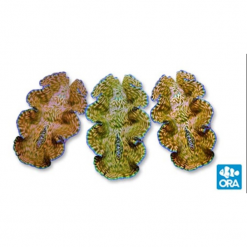
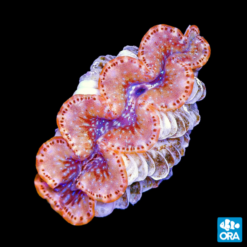
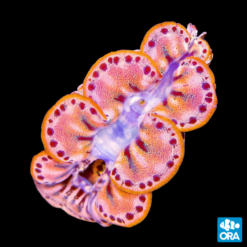
The ORA Hippopus Clam features a golden-brown shell with reddish blotches and irregular concentric bands. Its mantle displays vibrant pinstriping with blue, green, or purple iridescence. Unlike Tridacna clams, the mantle does not extend far past the thick symmetrical shell, giving it a compact, distinctive appearance.
Care & Requirements
The ORA Hippopus Clam should be placed directly on the sandbed or on a stable, flat rock at the bottom of the tank. Avoid areas with strong, direct current, as they may cause the clam to close and stress. Moderate to high lighting (150–350 PAR) supports the clam’s symbiotic zooxanthellae, while occasional supplemental phytoplankton feeding benefits long-term health.
Water Parameters
- Salinity: 1.024–1.026 specific gravity
- Temperature: 75–78 °F
- pH: 8.1–8.4
- Alkalinity: 8–9 dKH
- Calcium: 380–450 ppm
- Magnesium: 1300–1450 ppm
- Nitrate: 10–30 ppm
- Phosphate: 0.01–0.1 ppm
- Ammonia/Nitrite: Undetectable
Is supplemental feeding required?
While primarily photosynthetic, occasional high-quality phytoplankton supplementation helps maintain growth.
How fast does it grow?
The ORA Hippopus Clam is slow-growing, reaching full size over many years.
What’s the ideal placement?
A stable sandbed or flat rock base ensures best results.
Tank Mates & Compatibility
The ORA Hippopus Clam is fully reef safe and peaceful. Suitable companions include reef-safe fish and invertebrates that do not nip at mantles. Avoid predatory species such as triggerfish, puffers, and some wrasses, which may damage the clam.
Are Hippopus clams reef safe?
Yes, they are fully reef safe and pose no threat to corals or invertebrates.
Which tank mates should be avoided?
Predatory fish that may pick at mantles should never be housed with them.
What invertebrates pair well?
Snails, shrimp, and peaceful reef species make excellent companions.
Aquaculture/Availability
ORA consistently produces aquacultured Hippopus Clams, offering a sustainable and healthier alternative to wild-caught specimens. These clams adapt more readily to aquarium conditions, resist disease, and survive shipping stress better than wild clams. Due to slow growth and controlled breeding, availability is often limited.
Are these captive bred?
Yes, ORA aquacultures Hippopus Clams.
Why choose aquacultured over wild?
They are more sustainable, disease-resistant, and adapt better in aquariums.
Is supply limited?
Yes, availability is often limited due to slow growth rates.
Why Buy From Oceansgarden.com
- Captive-Bred & Sustainable: Many of our fish and invertebrates are captive-bred or sustainably sourced to promote healthy reef ecosystems.
- Expert Care Before Shipping: Every animal is maintained under professional aquarium standards for health, diet, and water quality.
- Live Arrival Guarantee: We stand behind each shipment with a Live Arrival Guarantee for your peace of mind.
- Fast, Reliable Shipping: Orders are packed with proven methods and shipped overnight to ensure safe arrival.
- Transparent Policies: Clear shipping, refund, and guarantee information available on every order page.
- Trusted by Hobbyists: Backed by years of experience and thousands of satisfied marine aquarium keepers across the U.S.
FAQ
How big do ORA Hippopus Clams get in home aquariums?
With proper care, ORA Hippopus Clams can grow up to 30 inches, though growth is slow and may take many years to reach maximum size.
Do Hippopus clams help improve water quality?
Yes, like other large clams, Hippopus clams filter feed, removing particulates and excess nutrients such as nitrates from the water column, contributing to improved water clarity and quality.
What lighting is best for an ORA Hippopus Clam?
Moderate to high lighting in the 150–350 PAR range is recommended. A PAR meter can help fine-tune light placement to support photosynthesis.
How long do Hippopus clams live in aquariums?
When provided with stable water conditions, proper lighting, and supplemental nutrition, Hippopus clams can live for decades in captivity.
Do Hippopus clams need special substrate?
No, they can thrive when placed directly on a sandbed or flat rock at the bottom of the tank. The main requirement is a stable, secure placement away from predators.
What’s the difference between Hippopus and Tridacna clams?
Unlike Tridacna species, the Hippopus clam’s mantle does not extend far past the shell. It has a thicker, more compact shell with distinctive banding and blotches.
Can Hippopus clams be kept in nano tanks?
While very small tanks are not ideal, a minimum of 30 gallons is possible for young clams. Larger systems of 100 gallons or more are recommended for long-term health.
Do Hippopus clams require dosing supplements?
Yes, as they grow, they consume calcium, magnesium, and alkalinity, so maintaining balanced water chemistry through dosing may be necessary.
| size | 2-3 inches |
|---|
Related products