ORA Neon Dottyback Captive-Bred for Sale
The ORA Neon Dottyback Captive-Bred (Pseudochromis aldabraensis) is a hardy saltwater fish with striking coloration and an active personality. Are neon Dottybacks aggressive? They are semi-aggressive but tend to be more manageable when captive-bred, especially in spacious tanks. What tank size does a Neon Dottyback need? A minimum of 30 gallons is recommended for one fish, with larger aquariums reducing territorial behavior. What does a Neon Dottyback eat? They accept a variety of meaty foods and adapt well to prepared diets. Is the Neon Dottyback reef safe? Generally yes, though care should be taken with very small invertebrates. How do you take care of a Neon Dottyback? Provide stable reef conditions and hiding places within live rock to keep stress levels low.
| Specification | Details |
|---|---|
| Scientific Name | Pseudochromis aldabraensis |
| Family | Pseudochromidae |
| Origin | Captive-Bred (ORA) |
| Adult Size | 3.5–4 inches |
| Lifespan | 5–7 years |
| Minimum Tank Size | 30 gallons |
| Temperament | Semi-aggressive |
| Reef Safe | With caution (may eat shrimp) |
| Diet | Carnivorous (mysis, brine shrimp, pellets) |
| Temperature | 75–80°F |
| pH Range | 8.1–8.4 |
| Salinity | 1.020–1.026 |
Appearance
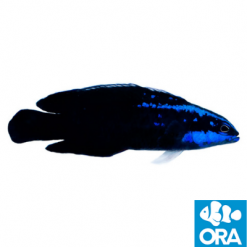
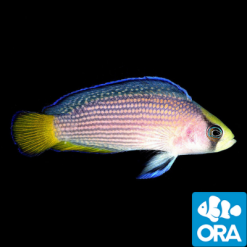
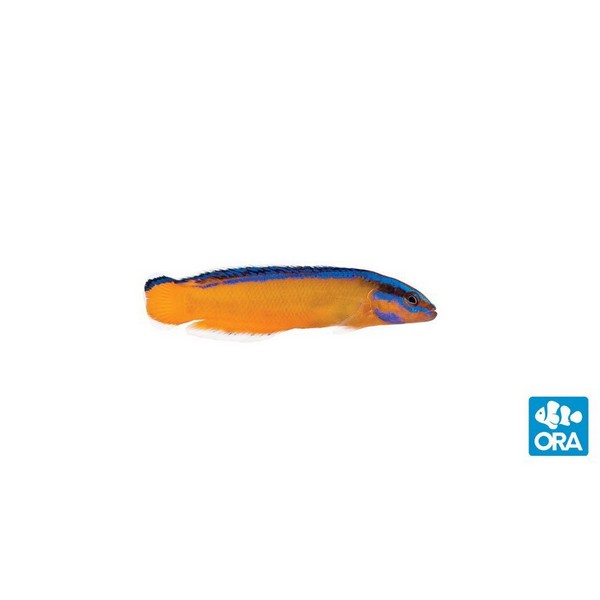
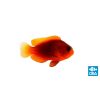
This species shows a vivid orange body accented with sharp neon-blue streaks along its dorsal fin, tail, and face. The contrast makes it stand out among reef fish, and the stripes become more intense under proper lighting and care. Adults reach about 4 inches, and captive-bred individuals often display consistent coloration throughout their lives.
Care & Requirements
The ORA Neon Dottyback is well-suited to aquarists who can provide the right environment. A 30-gallon tank is the minimum, but larger systems help reduce territorial behavior. This cave-dwelling fish requires live rock with crevices for hiding and feels more secure when natural shelter is available. A secure lid is necessary, as dottybacks are strong jumpers.
Feeding should include mysis shrimp, brine shrimp, krill, high-quality flakes, sinking pellets, and occasional live foods such as amphipods. Offering small meals 2–3 times daily maintains their health and encourages strong coloration.
Maintain stable reef parameters: 75–80°F, pH 8.1–8.4, salinity 1.020–1.026, with nitrate levels below 20 ppm. Moderate water flow is recommended, and water quality should remain high for long-term health.
- Do Neon Dottybacks jump? Yes, they are prone to jumping and require a secure lid.
- Are captive-bred Neon Dottybacks easier to keep? Yes, they adapt quickly to aquariums and often show reduced aggression compared to wild-caught fish.
Tank Mates & Compatibility
Tank mates should be chosen carefully. Larger, confident fish such as clownfish, tangs, wrasses, and sturdy damselfish typically do well alongside Neon Dottybacks. Most invertebrates like crabs and snails also make safe companions.
Caution is required with timid or very small fish, which may be bullied. Other dottybacks and species with similar shapes, such as royal grammas, often trigger aggression in smaller tanks. Ornamental shrimp may be viewed as prey and should not be housed with this fish unless in very large systems where risk is reduced.
- Can Neon Dottybacks live with shrimp? They may attack small ornamental shrimp such as sexy shrimp, so it is not recommended.
- Can multiple Neon Dottybacks live together? Only in very large aquariums, otherwise they will fight over territory.
Aquaculture/Availability
The ORA Neon Dottyback Captive-Bred is a reliable aquacultured species that adapts well to aquarium life. ORA consistently breeds this fish, ensuring a steady supply without the need for wild collection. Captive-bred individuals tend to be hardier, show strong feeding responses, and are better adjusted to community aquariums compared to wild-caught counterparts. Choosing ORA fish supports sustainable practices and reduces strain on natural reef populations.
- Are all ORA Neon Dottybacks captive-bred? Yes, ORA raises this species exclusively through aquaculture.
- Why buy captive-bred fish? They are disease-resistant, adapt more easily, and reduce impact on wild ecosystems.
Why Buy From Oceansgarden.com
- Captive-Bred & Sustainable: Many of our fish and invertebrates are captive-bred or sustainably sourced to promote healthy reef ecosystems.
- Expert Care Before Shipping: Every animal is maintained under professional aquarium standards for health, diet, and water quality.
- Live Arrival Guarantee: We stand behind each shipment with a Live Arrival Guarantee for your peace of mind.
- Fast, Reliable Shipping: Orders are packed with proven methods and shipped overnight to ensure safe arrival.
- Transparent Policies: Clear shipping, refund, and guarantee information available on every order page.
- Trusted by Hobbyists: Backed by years of experience and thousands of satisfied marine aquarium keepers across the U.S.
FAQ
Do Neon Dottybacks need slow acclimation?
Yes, drip acclimation for 30–45 minutes is recommended to avoid stress from sudden water changes.
Can Neon Dottybacks change color?
Their markings may intensify with a varied diet and stable conditions, but they do not change patterns.
Do Neon Dottybacks breed in home aquariums?
They can spawn in captivity, but aggression between pairs makes it difficult for most at home hobbyists.
How can I tell if a Dottyback is stressed?
Look for hiding, faded coloration, heavy breathing, or refusal to eat.
Are Neon Dottybacks often confused with other species?
Yes, they can be mistaken for Orchid Dottybacks, but Neons are larger and more orange.
Do they help control pests?
Yes, they are known to feed on bristle worms, helping regulate populations in reef tanks.
What type of water flow do they prefer?
Moderate water movement that replicates reef conditions is best.
Do they hide a lot?
Yes, especially when first introduced. Providing caves and rockwork helps them feel secure and makes them more outgoing.
| size | 1-2 inches |
|---|
Related products