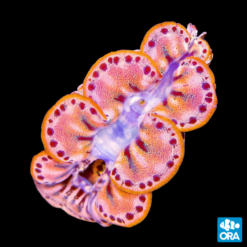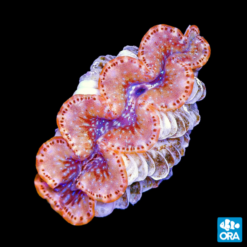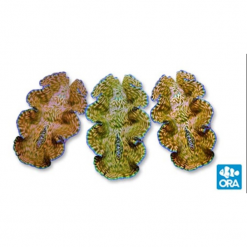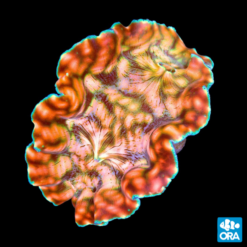
ORA Squamosa Clam for Sale
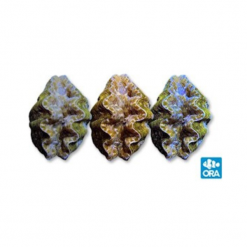
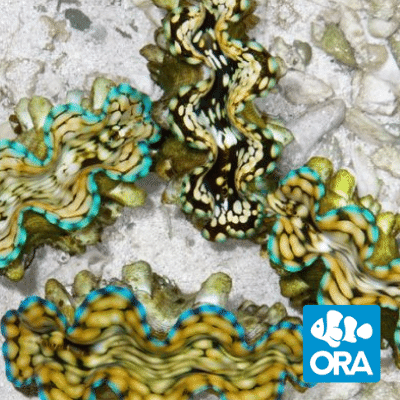
The ORA Squamosa Clam (Tridacna squamosa) is a striking centerpiece for saltwater aquariums, prized for its patterned mantle and scaly shell ridges known as scutes. Aquacultured by ORA, this clam is sustainably farmed and highly resilient, making it ideal for aquarists seeking beauty and eco-friendly responsibility in one species. Unlike wild specimens, ORA clams adapt quickly to captive conditions, resist shipping stress, and thrive under stable lighting and water parameters. Aquarists value this clam for its moderate care level, natural filtration benefits, and long lifespan—making it an excellent investment for both beginners and experienced reef keepers.
Key Facts
| Specification | Details |
|---|---|
| Scientific Name | Tridacna squamosa |
| Family | Tridacnidae |
| Origin | Indo-Pacific (aquacultured Marshall Islands) |
| Max Size | Up to 12 inches (30 cm) |
| Purchase Size | 1.5 – 2 inches |
| Lifespan | 10–15 years |
| Care Level | Moderate |
| Minimum Tank Size | 70 gallons |
| Temperament | Peaceful |
| Reef Safe | Yes |
| Diet | Photosynthetic; supplemental phytoplankton |
| Temperature | 72–78°F (22–26°C) |
| pH Range | 8.1–8.4 |
| Salinity | 1.023–1.025 |
Appearance
The ORA Squamosa Clam displays a mantle patterned in shades of golden-brown, cream, and blue, often accented by darker marbling. Its shell features large, prominent scutes that form textured ridges, creating a natural, sculpted appearance. Mantle coloration and pattern intensity may vary slightly between individuals, adding to each clam’s unique visual appeal.
Care & Requirements
The Squamosa Clam thrives under moderate to high lighting, ideally 150–250 µmol/m²/s PAR. Proper acclimation is essential—start the clam lower in the tank and move upward gradually to prevent bleaching. Stable water chemistry supports shell growth and overall health; maintain calcium at 400–450 ppm, alkalinity at 8–12 dKH, and magnesium at 1250–1350 ppm. Position the clam on a sand bed or flat rock for secure attachment. While its symbiotic zooxanthellae handle most nutrition through photosynthesis, small specimens benefit from supplemental phytoplankton feedings several times weekly.
Do Squamosa Clams need strong water flow?
No. Moderate, indirect flow prevents tissue stress and allows efficient feeding.
How fast do Squamosa Clams grow?
Under proper lighting, growth can reach about 1 inch per year.
Can Squamosa Clams survive under LED lighting?
Yes, high-quality reef LEDs that produce strong PAR in the 400–500 nm spectrum support healthy mantle color and growth.
Tank Mates & Compatibility
The ORA Squamosa Clam is peaceful and safe for reef aquariums but should not be housed with aggressive species. Avoid fish that nip at clam mantles such as triggers, puffers, and large angelfish. Ideal tank mates include tangs, gobies, clownfish, and small wrasses. Maintain stable parameters to prevent irritation or mantle retraction.
Are Squamosa Clams safe with corals?
Yes, they coexist well with corals and benefit from similar water conditions.
Can two Squamosa Clams be kept together?
Yes, provided there is space for growth and consistent lighting across both.
Do invertebrates bother Squamosa Clams?
Most do not, though avoid placing them near aggressive crabs or predatory snails.
Aquaculture/Availability
ORA operates a leading aquaculture facility in the Marshall Islands, sustainably producing Squamosa Clams for the aquarium trade. Captive-bred specimens adapt faster, display vivid color patterns, and are more disease-resistant than wild-caught individuals. Currently, captive-bred ORA Squamosa Clams are seasonally available due to limited production runs.
Are all ORA Squamosa Clams captive-bred?
Yes, all ORA Squamosa Clams are aquacultured in controlled marine farms.
Do aquacultured clams ship better than wild clams?
Yes, aquacultured clams handle transit stress and acclimation far better.
How often does ORA release Squamosa Clams?
Typically in small batches, depending on growth cycles and seasonal availability.
Why Buy From Oceansgarden.com
- Captive-Bred & Sustainable: Many of our fish and invertebrates are captive-bred or sustainably sourced to promote healthy reef ecosystems.
- Expert Care Before Shipping: Every animal is maintained under professional aquarium standards for health, diet, and water quality.
- Live Arrival Guarantee: We stand behind each shipment with a Live Arrival Guarantee for your peace of mind.
- Fast, Reliable Shipping: Orders are packed with proven methods and shipped overnight to ensure safe arrival.
- Transparent Policies: Clear shipping, refund, and guarantee information available on every order page.
- Trusted by Hobbyists: Backed by years of experience and thousands of satisfied marine aquarium keepers across the U.S.
FAQ
How long does it take for a Squamosa Clam to attach to a surface?
Within a few weeks, the clam’s byssal threads anchor it securely to a sand bed or rock surface, allowing stable positioning in the aquarium.
Can Squamosa Clams filter water in a reef tank?
Yes, these clams contribute to natural filtration by removing microalgae and particulates from the water column, helping improve clarity.
What lighting schedule works best for Squamosa Clams?
Maintain 8–10 hours of full-spectrum lighting daily with moderate intensity to mimic reef conditions and sustain zooxanthellae.
Are Squamosa Clams suitable for nano tanks?
Only smaller juveniles can temporarily live in nano systems; adults require at least a 70-gallon setup.
Do Squamosa Clams change color over time?
Mantle colors can deepen or shift slightly depending on lighting quality, intensity, and water stability.
Can I keep multiple ORA clams together?
Yes, ORA clams coexist peacefully and often enhance reef biodiversity when spaced adequately.
What supplements help maintain clam health?
Calcium, magnesium, and strontium supplementation support shell formation and consistent growth.
Is the Squamosa Clam sensitive to nitrates?
Yes, keep nitrates below 10 ppm for optimal health and shell coloration.
| size | 1.5 – 2 inches |
|---|
Related products