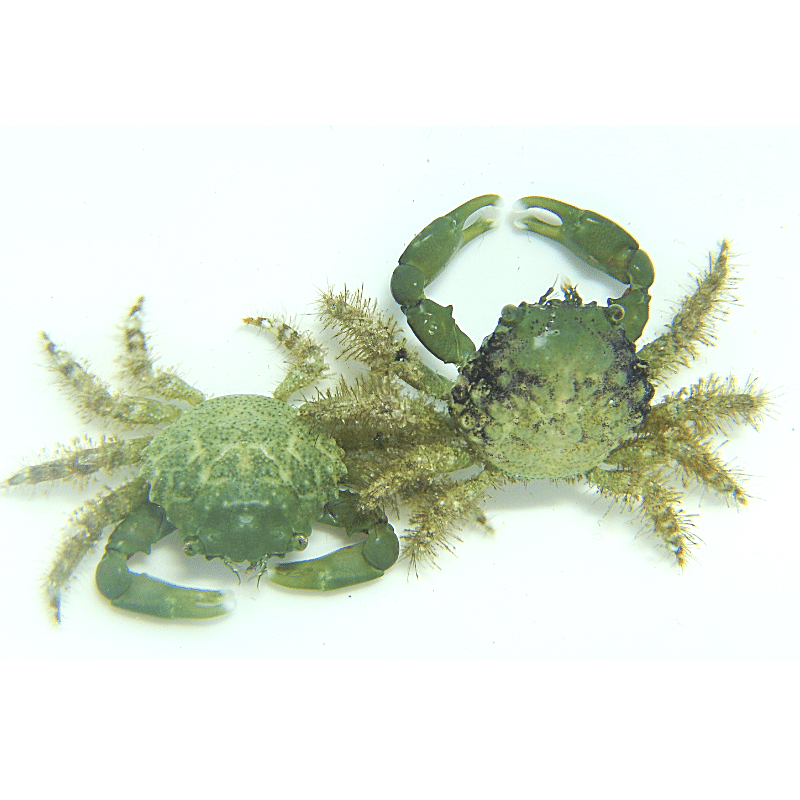
The Emerald Crab (Mithrax sculptus) is a reef-safe algae-eating crab trusted by saltwater aquarists for its role in controlling bubble algae and other nuisance growth. As a staple member of the marine cleanup crew, it reduces algae buildup while scavenging leftover food and detritus. Aquarists often ask if Emerald Crabs are reef safe or what they eat, and the answer is reassuring: they thrive on algae, organic debris, and supplemental foods, making them a reliable choice for reef aquariums. Their proven success in thousands of tanks and consistent demand make them a high-value addition when available.
Key Facts
| Specification | Details |
|---|---|
| Scientific Name | Mithrax sculptus |
| Family | Majidae |
| Origin | Western Atlantic, Caribbean |
| Max Size | 2–2.5 inches |
| Purchase Size | 1–1.5 inches |
| Lifespan | 2–4 years |
| Care Level | Easy |
| Minimum Tank Size | 20 gallons |
| Temperament | Peaceful, opportunistic scavenger |
| Reef Safe | Yes |
| Diet | Algae, bubble algae, detritus, pellets, nori, mysis shrimp |
| Temperature | 75-80°F |
| pH Range | 8.1–8.4 |
| Salinity | 1.023–1.025 |
Appearance
Emerald Crabs have a rounded, flat green body with spoon-shaped claws designed for scraping algae from rock. Their coloration ranges from bright emerald to darker mossy tones, allowing them to camouflage against live rock. Primarily nocturnal scavengers, they spend daylight hours hiding in crevices and become more active at night.
Care & Requirements
Emerald Crabs are hardy in stable reef tanks with plenty of live rock for grazing and hiding. They feed on algae, detritus, and uneaten food, but if algae is scarce, supplement with nori sheets, pellets, or meaty foods like mysis shrimp. They require stable reef parameters: salinity 1.023–1.025, temperature 72–78°F, and pH 8.1–8.4. Copper-based treatments are deadly to invertebrates and must be avoided.
Molting is a normal part of their growth. After shedding their exoskeleton, they may hide until their new shell hardens. Shed shells are often mistaken for dead crabs but are harmless and can be left in the tank for calcium recycling.
Do Emerald Crabs eat bubble algae? Yes, they are one of the most effective natural grazers for bubble algae in reef aquariums.
How often should Emerald Crabs be fed? If algae is present, extra feeding may only be needed 2–3 times weekly.
Are Emerald Crabs hard to keep? No, they are beginner-friendly as long as tank conditions remain stable.
Tank Mates & Compatibility
Emerald Crabs are peaceful and reef safe, coexisting well with most reef fish, snails, and shrimp. They should not be housed with aggressive predators such as puffers, triggers, or large wrasses. While opportunistic, they rarely disturb corals if well-fed and provided algae to graze. Multiple Emerald Crabs can be kept in the same tank if sufficient rockwork and algae are available.
Can Emerald Crabs live together? Yes, if the tank has enough algae and hiding spaces.
Will Emerald Crabs harm corals? Only in rare cases of starvation; under normal conditions they leave corals alone. They are Reef Safe.
Are Emerald Crabs safe with shrimp? Yes, they are generally compatible with cleaner and ornamental shrimp.
Aquaculture/Availability
Currently, captive-bred Emerald Crabs (Mithrax sculptus) are not available; they are wild-collected from the Caribbean and Western Atlantic. Collection depends on seasonal conditions and supply may fluctuate. Breeding in captivity is rare and not commercially established. Acclimation to reef tanks is straightforward when done gradually.
Are Emerald Crabs wild-caught or tank-raised? They are wild-caught, with very limited aquaculture efforts.
Is availability year-round? No, supply can be seasonal and subject to collection conditions.
Do wild-caught Emerald Crabs acclimate well? Yes, when acclimated slowly, they adapt well to reef aquariums.
Why Buy From Oceansgarden.com
- Captive-Bred & Sustainable: Many of our fish and invertebrates are captive-bred or sustainably sourced to promote healthy reef ecosystems.
- Expert Care Before Shipping: Every animal is maintained under professional aquarium standards for health, diet, and water quality.
- Live Arrival Guarantee: We stand behind each shipment with a Live Arrival Guarantee for your peace of mind.
- Fast, Reliable Shipping: Orders are packed with proven methods and shipped overnight to ensure safe arrival.
- Transparent Policies: Clear shipping, refund, and guarantee information available on every order page.
- Trusted by Hobbyists: Backed by years of experience and thousands of satisfied marine aquarium keepers across the U.S.
FAQ
How long do Emerald Crabs live in an aquarium? With proper care and stable parameters, they typically live 2–4 years.
Do Emerald Crabs need sand? A sand bed is not required, but they benefit from live rock structures for grazing and hiding.
Can Emerald Crabs survive on algae alone? Yes, though supplemental feeding ensures long-term health and reduces aggression.
How do Emerald Crabs molt? They shed their exoskeleton, leaving behind a shell that looks like the crab itself.
Are Emerald Crabs active during the day? They are nocturnal and usually hide in rock crevices during daylight hours.
What size tank is best for one Emerald Crab? At least 20 gallons, with additional space if keeping multiples.
Can Emerald Crabs be kept in pairs? Yes, provided there is enough algae and hiding space to prevent competition.
Do Emerald Crabs help with detritus cleanup? Yes, they consume leftover food and organic debris along with algae.
| size | .5-2 inches |
|---|
Related products