ORA Lightning Maroon Clownfish – Black Variation for Sale
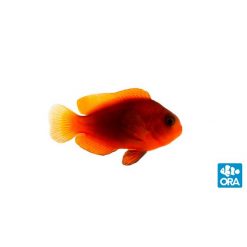
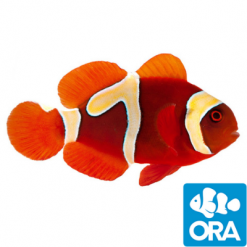
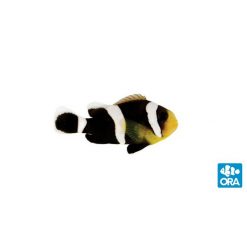
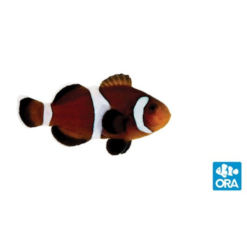
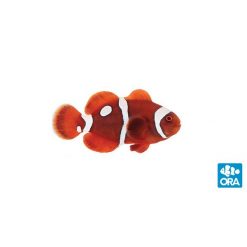
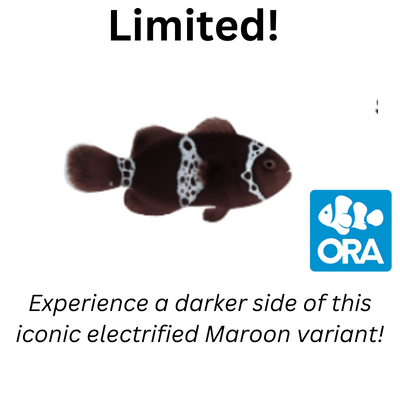
ORA Lightning Maroon Clownfish – Black Variation is a captive-bred designer clownfish from Oceans, Reefs & Aquariums (ORA), bred for its deep maroon body and unique, irregular “lightning bolt” stripes. The Black Variation enhances this pattern with darker pigmentation, creating a one-of-a-kind fish highly sought after by collectors. Known for its bold temperament and strong personality, this clownfish thrives in stable reef aquariums when paired carefully and provided adequate space. Captive breeding ensures adaptability, disease resistance, and consistent quality trusted by marine aquarists worldwide.
Key Facts
| Specification | Details |
|---|---|
| Scientific Name | Premnas biaculeatus |
| Family | Pomacentridae |
| Origin | Captive-bred by ORA, USA |
| Maximum Size | 6 inches |
| Purchase Size | 1.5–2.5 inches |
| Lifespan | Up to 10 years |
| Care Level | Intermediate |
| Minimum Tank Size | 30 gallons single / 50 gallons pair |
| Temperament | Aggressive / Territorial |
| Reef Safe | Yes, with caution |
| Diet | Omnivore – mysis shrimp, brine shrimp, pellets |
| Temperature | 75–78°F |
| pH Range | 8.1–8.4 |
| Salinity | 1.020–1.025 |
Appearance
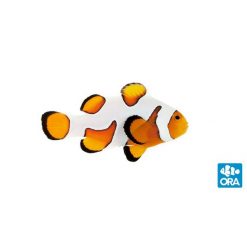
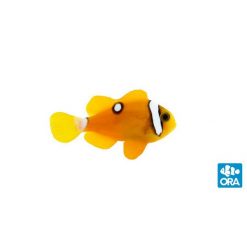
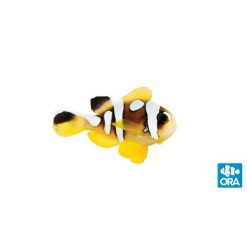
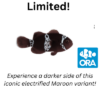
The ORA Lightning Maroon Clownfish – Black Variation displays a deep maroon base color overlaid with irregular “lightning bolt” white stripes. The black variation enhances contrast by introducing additional dark pigmentation, most visible near the fins and lower body. Each specimen’s pattern is entirely unique, giving every fish its own visual identity within the aquarium.
Care & Requirements
A single Lightning Maroon Clownfish requires a tank of at least 30 gallons, while a mated pair should have 50 gallons or more to reduce aggression. Stable reef parameters are essential—temperature between 75–78°F, pH 8.1–8.4, and specific gravity of 1.020–1.025. Provide live rock and caves for territorial boundaries and hiding spaces. Though hosting an anemone is optional, a Bubble Tip Anemone (Entacmaea quadricolor) enhances natural behavior. Feed a mix of high-quality frozen and pellet foods such as mysis shrimp, brine shrimp, and algae-based blends two to three times daily. Avoid copper-based medications, as clownfish are sensitive to copper exposure. Females grow larger than males and dominate the pair hierarchy. Use drip acclimation when introducing new specimens to prevent stress.
How can aggression be reduced in Maroon Clownfish?
Provide adequate space, avoid small tanks, and limit tank mates to species that can handle assertive behavior.
Do Lightning Maroon Clownfish need anemones?
Not required, but a host anemone supports natural activity and comfort.
What water parameters do they need?
Maintain 75–78°F, pH 8.1–8.4, and specific gravity 1.020–1.025.
Tank Mates & Compatibility
This species can coexist with other semi-aggressive fish such as tangs, wrasses, and larger gobies. Avoid housing with other clownfish species or small timid fish, as the Lightning Maroon can become territorial. Best kept singly or as a confirmed ORA mated pair to prevent conflict. In reef tanks, these fish are generally coral-safe but may rearrange coral near their chosen territory.
Can I keep two Maroon Clownfish together?
Only as a proven ORA mated pair with a clear size difference between male and female.
Are they safe with invertebrates?
Generally yes, though cleaner shrimp and small crabs should be monitored.
Will they attack corals?
No, but they may move soft corals near their territory.
Aquaculture/Availability
ORA consistently breeds the Lightning Maroon Clownfish – Black Variation in limited batches. Captive-bred individuals are more resilient, disease-resistant, and easier to acclimate than wild-caught fish. Due to restricted breeding schedules and high collector demand, this morph is not always available year-round. Collectors often pre-order or reserve ahead of seasonal releases. Every ORA fish undergoes controlled breeding and quarantine to ensure quality and health.
Is the Black Variation captive-bred?
Yes, all ORA Lightning Maroon Black Variations are captive-bred by ORA in Florida.
Why is this variant limited?
ORA produces small seasonal batches due to selective breeding cycles.
When is it typically restocked?
Availability fluctuates; often released around late fall or early winter.
Why Buy From Oceansgarden.com
- Captive-Bred & Sustainable: Many of our fish and invertebrates are captive-bred or sustainably sourced to promote healthy reef ecosystems.
- Expert Care Before Shipping: Every animal is maintained under professional aquarium standards for health, diet, and water quality.
- Live Arrival Guarantee: We stand behind each shipment with a Live Arrival Guarantee for your peace of mind.
- Fast, Reliable Shipping: Orders are packed with proven methods and shipped overnight to ensure safe arrival.
- Transparent Policies: Clear shipping, refund, and guarantee information available on every order page.
- Trusted by Hobbyists: Backed by years of experience and thousands of satisfied marine aquarium keepers across the U.S.
FAQ
How large do ORA Lightning Maroon Clownfish grow?
Adults can reach up to 6 inches, with females significantly larger than males once dominance is established.
What’s the difference between the regular and Black Variation?
The Black Variation features enhanced black pigmentation and a darker maroon tone, developed from selective captive breeding to emphasize contrast and rarity.
Can I keep Lightning Maroon Clownfish with other clownfish species?
No. Mixing with other clownfish species often results in aggression; these should be housed singly or as an ORA-confirmed mated pair.
What is the ideal diet for a Lightning Maroon Clownfish?
Feed a mix of frozen mysis shrimp, brine shrimp, spirulina pellets, and high-protein marine flakes twice daily for optimal color and health.
Are Lightning Maroon Clownfish reef-safe?
Yes, they are reef-safe and coexist well with corals, though they may adjust coral placement near their nesting site.
Can I breed ORA Lightning Maroon Clownfish at home?
Breeding is possible but requires a stable pair and separate nursery system for fry, as adult aggression increases during spawning.
How do I introduce a pair of ORA Lightning Maroon Clownfish to a new aquarium?
Introduce the smaller fish first, then the larger after acclimation. Provide hiding areas and observe closely for territorial disputes.
Why are captive-bred clownfish better for aquariums?
Captive-bred fish adapt better to aquarium life, have lower mortality rates, and don’t impact wild reef populations.
How long do Lightning Maroon Clownfish live in captivity?
With proper care and stable conditions, they can live up to 10 years or more.
What causes variation in stripe patterns?
Each fish’s “lightning” pattern is genetically unique, resulting in one-of-a-kind stripe formations that intensify as the fish matures.
| size | 1.5-2.5 inches |
|---|
Related products